1924
Fantasy · Silent

Discover · Visit · Go out · Live
 18952026
Film · Literature · Song
Setting, character, refuge and myth: for more than a century, the hill has inspired filmmakers, writers and musicians. Works do not merely record the district; they transform it, move its streets and give it colours, voices and memories sometimes more durable than reality.
The cultural guide
This guide combines classics, popular works, memoirs and archives. It goes beyond Amélie and Moulin Rouge to explore film noir, literary bohemia, realist song, musicals and cabaret memory. Each entry acts as a doorway, giving enough context to choose a work without revealing its entire story.
The chronological order shows how the district’s image shifts. The Montmartre of poor artists becomes a place of crime, romance, nostalgia and finally global spectacle. These visions sometimes contradict one another, which is exactly what makes them interesting: no single one owns the truth of the district.
A closer look
A famous address cannot explain everything about the work made there. Look at Montmartre carefully by distinguishing the site’s history, surviving objects and display choices. This reading guide works both in museums and when exploring archives.
| What you observe | What the source establishes | A useful question |
|---|---|---|
| The 1912 addressSuzanne Valadon, Maurice Utrillo and André Utter | The museum dates their arrival at 12 rue Cortot to 1912. This helps place works within a period of working and living together. | Does the work I am looking at date from this period? A shared address does not erase individual approaches and careers.Read the official source ↗ |
| The reconstructed studioA display designed by Hubert Le Gall | The museum explains that furnishings were sourced to recreate the interior using photographs, texts and artworks. The visible objects are therefore not an untouched ensemble surviving from 1912. | What belongs to the building, the documentary evidence and the reconstruction? Look at light, circulation and the easel’s position rather than assuming each object belonged to the artist.Read the official source ↗ |
| The painting and its labelObserve before interpreting | Title, date and technique identify the object in front of you. Composition, colour and viewpoint then call for your own observation. | What can I actually see, and what am I adding to the story? Describe two specific details before imagining the lives of the people depicted. |
In a street view, locate the horizon, the image edges and the point where your eye pauses. Then imagine shifting the frame one window to the right. A painter or photographer composes an image: some of the district remains outside the frame. When comparing it with today’s street, look first for building volumes and angles rather than a shop sign.
When works by Valadon, Utrillo and Utter are displayed, choose one by each. Compare contours, spatial construction and the presence of figures. Family connections illuminate a biography but cannot explain a painting on their own. Remember a difference in treatment rather than trying to rank the artists.
Observation questions are suggested ways of reading the district. Documentary information links to venues or the City of Paris; sources consulted on 15 October 2026. Check visiting conditions on those pages before setting out.
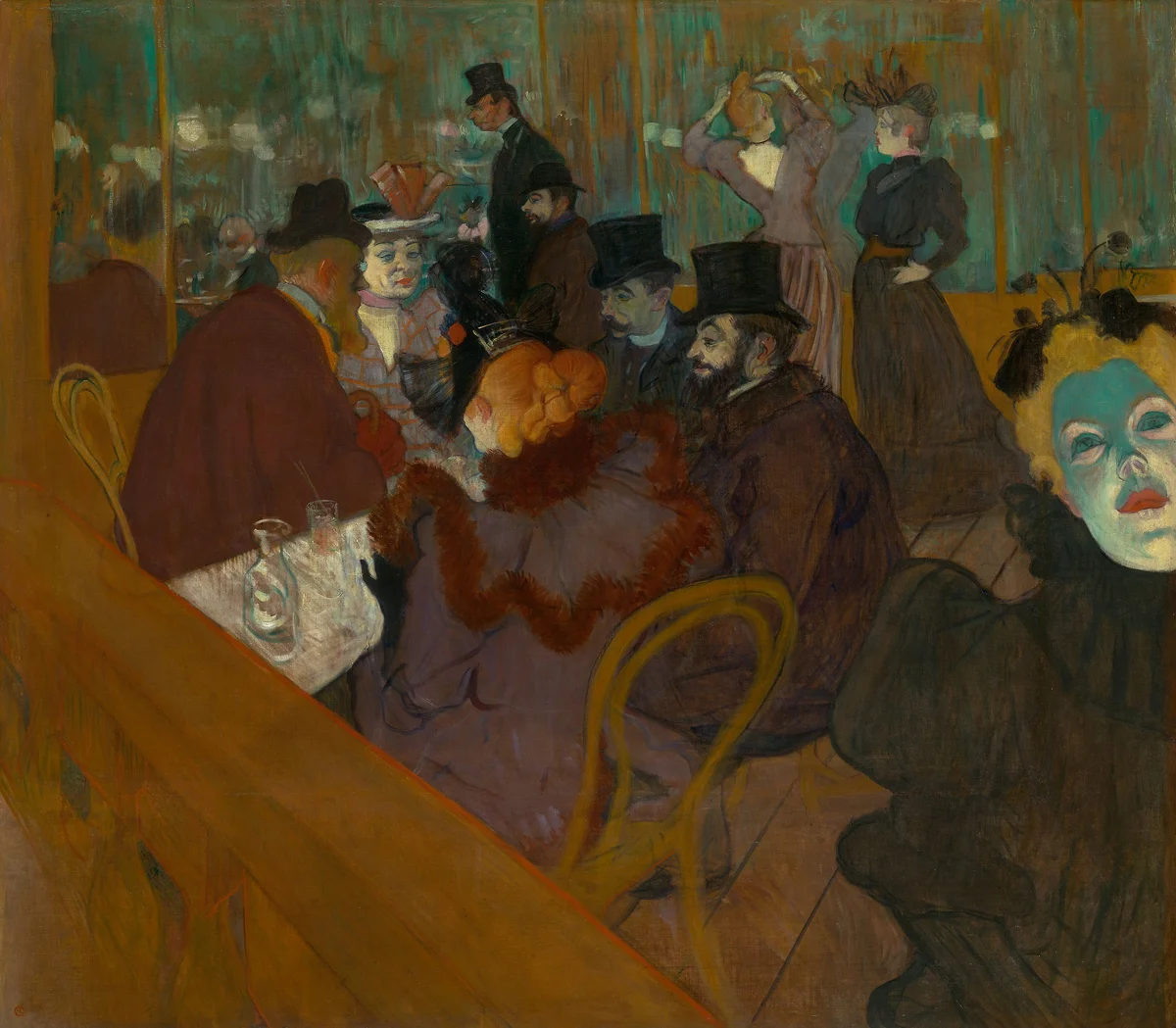
1892–1895
Painted in 1892–1895, At the Moulin Rouge is an oil painting held at the Art Institute of Chicago, rather than the Paris cabaret.
Look at the broad diagonal in the foreground and the contrasting faces. This painting presents an artist’s view of nightlife; it does not describe the Moulin Rouge’s current interior.
Museum record — Art Institute of Chicago ↗
01 · On screen
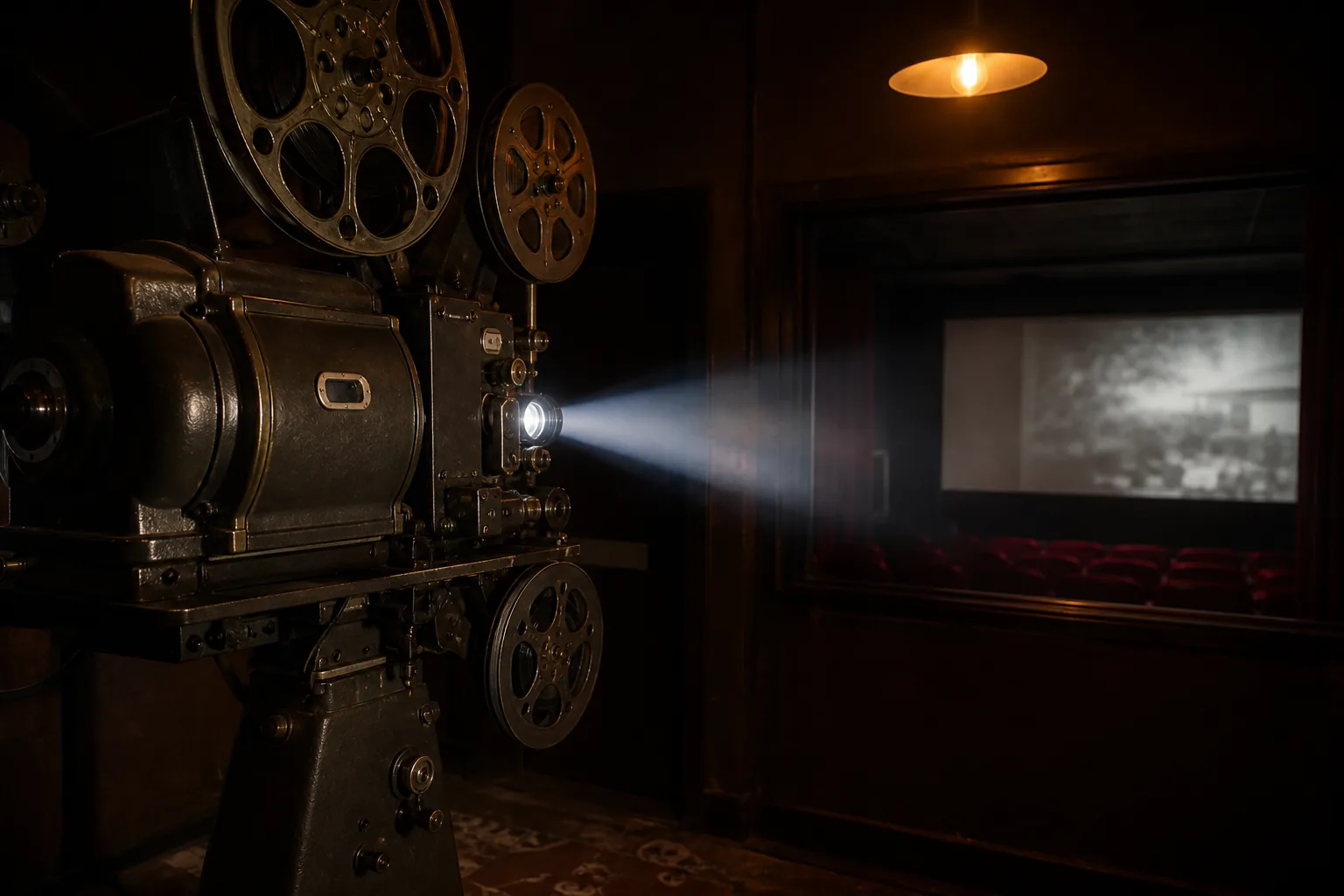
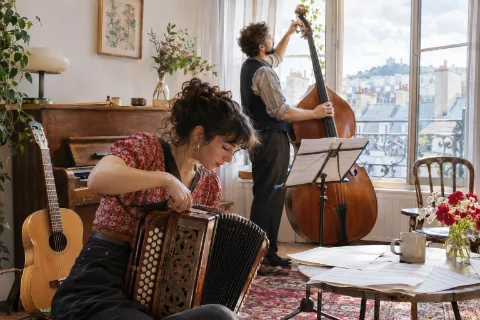
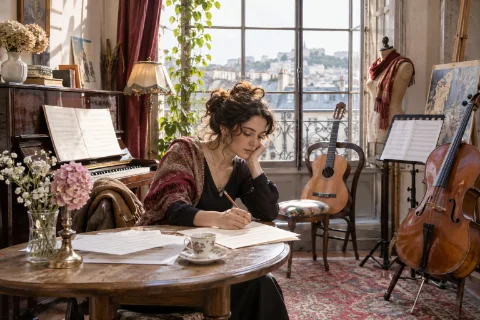
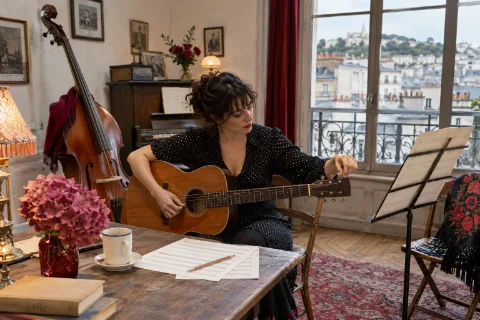
From silent cinema to contemporary action, stairways, cabarets, metro stations and sloping streets have served every genre. Directors often rearrange geography to strengthen a chase, encounter or song, so screen Montmartre is as much an edit as a real place.
Fantasy · Silent
Musical
Biography · Drama
Musical

Film noir
New Wave
Drama
Action · Thriller
Romantic comedy
Musical
Short film
Action
02 · Bookshelf
Noir novels, fantastic stories, memoirs and literary guides tell the hill from within. They contain modest rooms, penniless artists, late-opening cafés, friendships and anxieties. Memoirs should be read with their share of reconstruction: memory also transforms the streets it describes.
Poetry & memoir
Noir novel
Illustrated guide
Memoir
Short story
Memoir
Cultural history
Reissued memoir
03 · Listen
Before records, Montmartre was already singing in streets, cafés-concerts and cabarets. Refrains staged slang, trades, love and poverty, before film and recording carried that memory far beyond Paris. Listen to the words as well as the melody: they tell a society and how each era imagined the hill.
The nocturnal crossroads becomes an instantly recognisable refrain.
Read the documentary record ↗
Written for French Cancan, it forever links stairways, windmills and romantic melancholy.
Read the documentary record ↗
Recorded with La Complainte de la Butte, the song extends the world of French Cancan and nostalgia for the old district.
Read the documentary record ↗
Charles Aznavour composed and performed the song, with lyrics by Jacques Plante. Its narrator remembers his years as a penniless painter in Montmartre.
Read the documentary record ↗
The song accompanies Satine and Christian’s declaration of love in Baz Luhrmann’s Moulin Rouge!
Read the documentary record ↗
Bruant brought slang, the outskirts and modest lives into cabaret song.
Read the documentary record ↗Explore further: the Philharmonie de Paris traces light music, cafés-concerts and evenings at the Lapin Agile in Picasso’s Paris.
Philharmonie de Paris ↗Open archives
Toulouse-Lautrec posters, historic photographs, scores, newspapers and digitised books: public collections provide direct access to sources. Search by street, artist, cabaret or date, then compare documents. An image caption, catalogue record and publication context are often as useful as the work itself in avoiding false attributions and unsupported anecdotes.
Look closer
1895
In 1895, Moreau commissioned Albert Lafon to turn his house into a museum. A spiral staircase connects the large north-lit studios.
Look for. Compare the scale of the domestic rooms and studios. Observe how light affects the works; plan access to the upper floors separately.
Musée Gustave Moreau ↗1928 · 1930 · 1950
Opened in 1928, Studio 28 screened Buñuel’s L’Âge d’or in 1930. Jean Cocteau and Abel Gance became its patrons in 1950.
Look for. Connect this history with an actual screening: choose the film, language and time. Discover a working cinema alongside the neighbourhood’s filming locations.
Studio 28 ↗
1830
Ary Scheffer settled on rue Chaptal in 1830. His house and two studios formed a place of work and sociability in the Nouvelle Athènes district.
Look for. Distinguish house, courtyard and studios. This stop is in the 9th arrondissement: pair it with a Pigalle walk rather than a summit visit.
Musée de la Vie romantique ↗2010
Opened to the public in 2010, LE BAL is devoted to the document-image: photography, video and film question representations of the contemporary world.
Look for. When viewing a photographic series, distinguish subject, framing and image order. Ask what the sequence reveals that a single photograph cannot.
CNAP · Rapport d’activité 2023, p. 25 (PDF) ↗Compare viewpoints
Look at terrain, lines and uses: painting and photography offer different readings of the district. The collections holding the originals are identified below each reproduction.
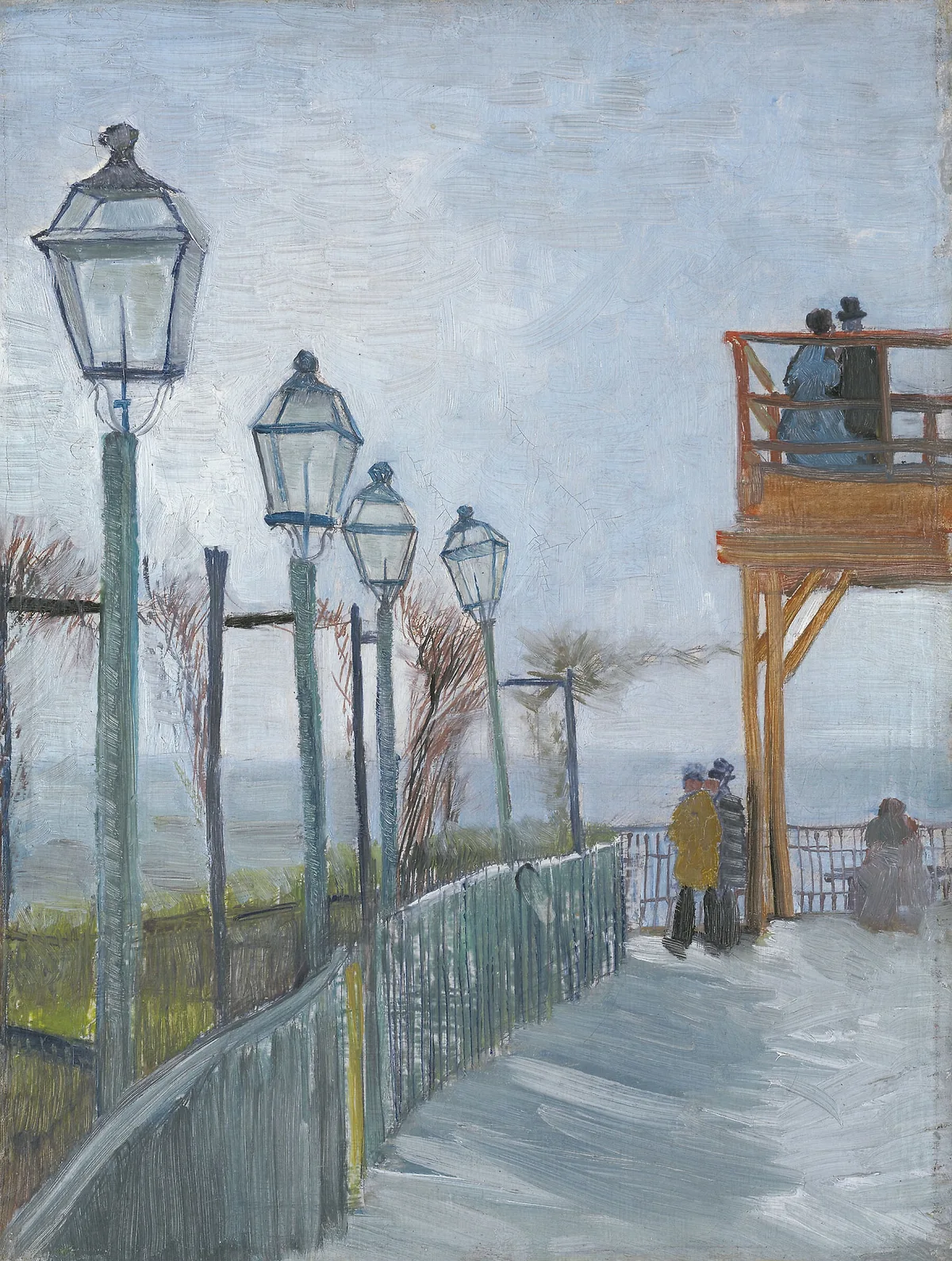
1887 · Vincent van Gogh
Oil on canvas mounted on pressboard · 43.6 × 33 cm
Dated early 1887 by the Art Institute of Chicago, this painting presents Montmartre as a place of terraces and strolling. The original belongs to the Chicago museum’s collection.
Look for. Follow the railing lines, then the figures and sky. Perspective draws the eye upwards: compare it with the slope you experience on rue Lepic.
Museum record ↗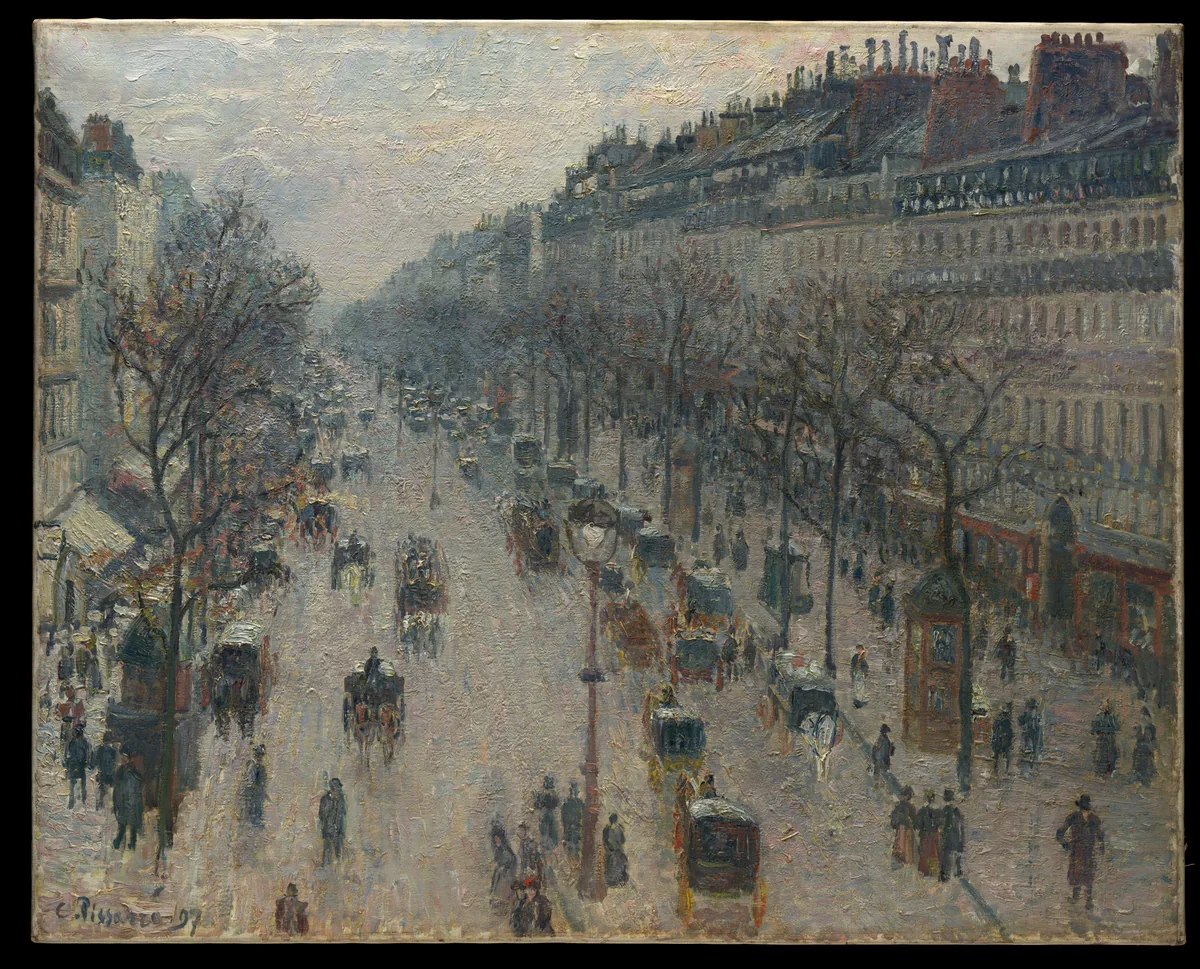
1897 · Camille Pissarro
Oil on canvas · 64.8 × 81.3 cm
In 1897 Pissarro painted the boulevards from the Grand Hôtel de Russie. Despite its name, boulevard Montmartre belongs to the Grands Boulevards: this painting does not depict the hill.
Look for. Notice the high viewpoint, rhythm of trees and tiny vehicles. Compare this broad urban perspective with the hill’s narrow streets and shifting slopes.
Museum record ↗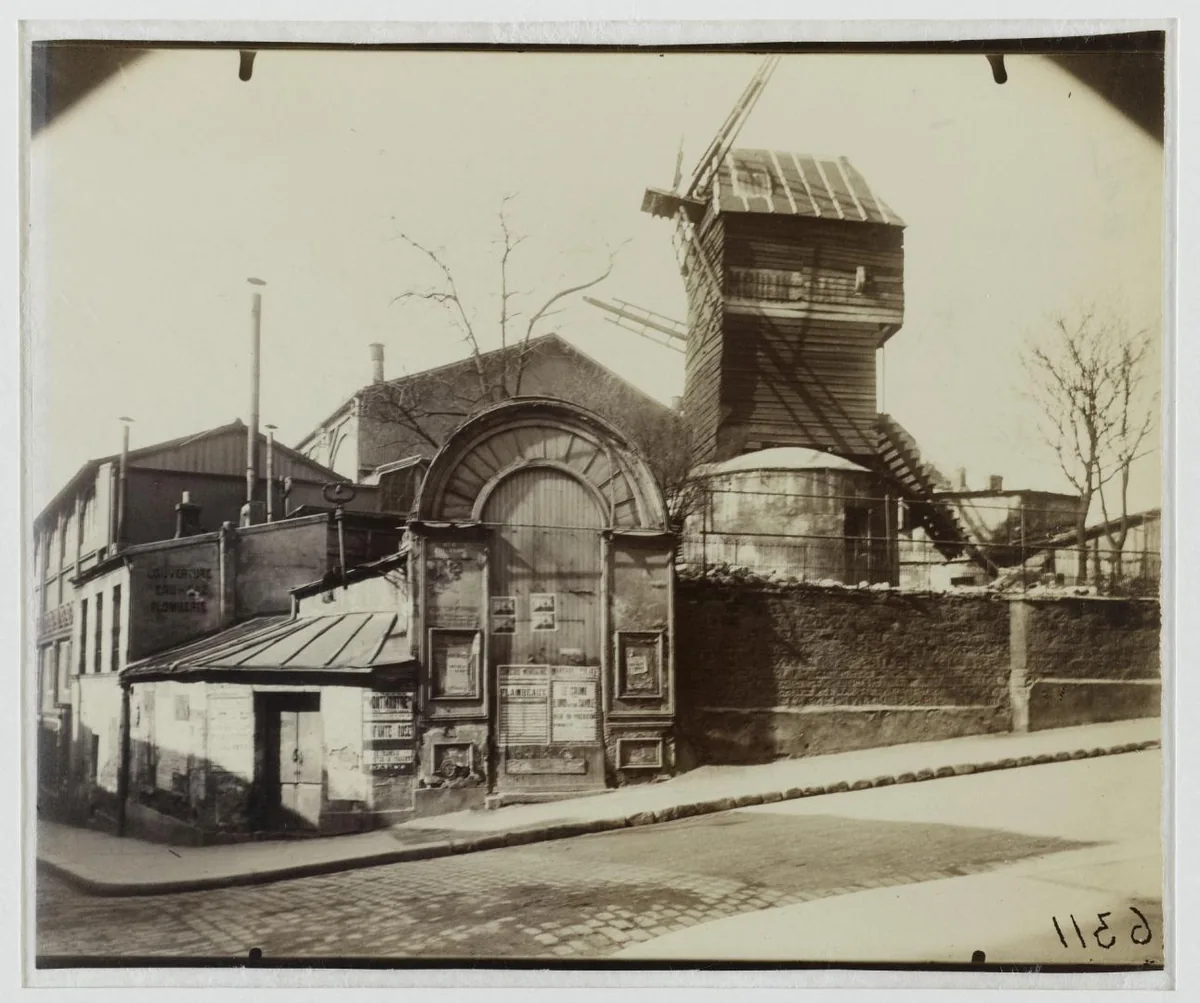
1922 · Eugène Atget
Photograph · archive document
Paris Musées dates this Eugène Atget photograph to 1922. It records an earlier state of the Moulin de la Galette and its surroundings, rather than their present appearance.
Look for. Compare the gateway, windmill and street alignment. A historic photograph guarantees neither the same viewpoint today nor access to private grounds.
Museum record ↗Understand more · choose well
A studio, a garden and an artwork tell different stories. Connect addresses to collections, then take time to look at the paintings: the visit becomes more precise than a sequence of famous names.
Musée de Montmartre places Renoir’s stay here between 1875 and 1876. Today’s gardens invite connections between light, foliage and painting; they are not an untouched nineteenth-century setting.
Musée de Montmartre — museum and gardens ↗The museum describes her arrival on rue Cortot in 1912 with Maurice Utrillo and André Utter. Look at her works for their composition, figures and colour, rather than reducing her role to a model or a painter’s mother.
Musée de Montmartre — museum and gardens ↗A façade and plaque offer a landmark, not admission to studios. Choose a question to observe: how does light enter, where is the courtyard, how does the building fit the slope? Look for answers from public space.

 Gallica · BnFDigitised images and texts of Paris↗
 Cinémathèque françaiseFilms, features and archives↗
 Musée de MontmartreArt collections and local history↗