The independent portal for Montmartre

GuidesEventsFilm & booksPractical infoDirectory
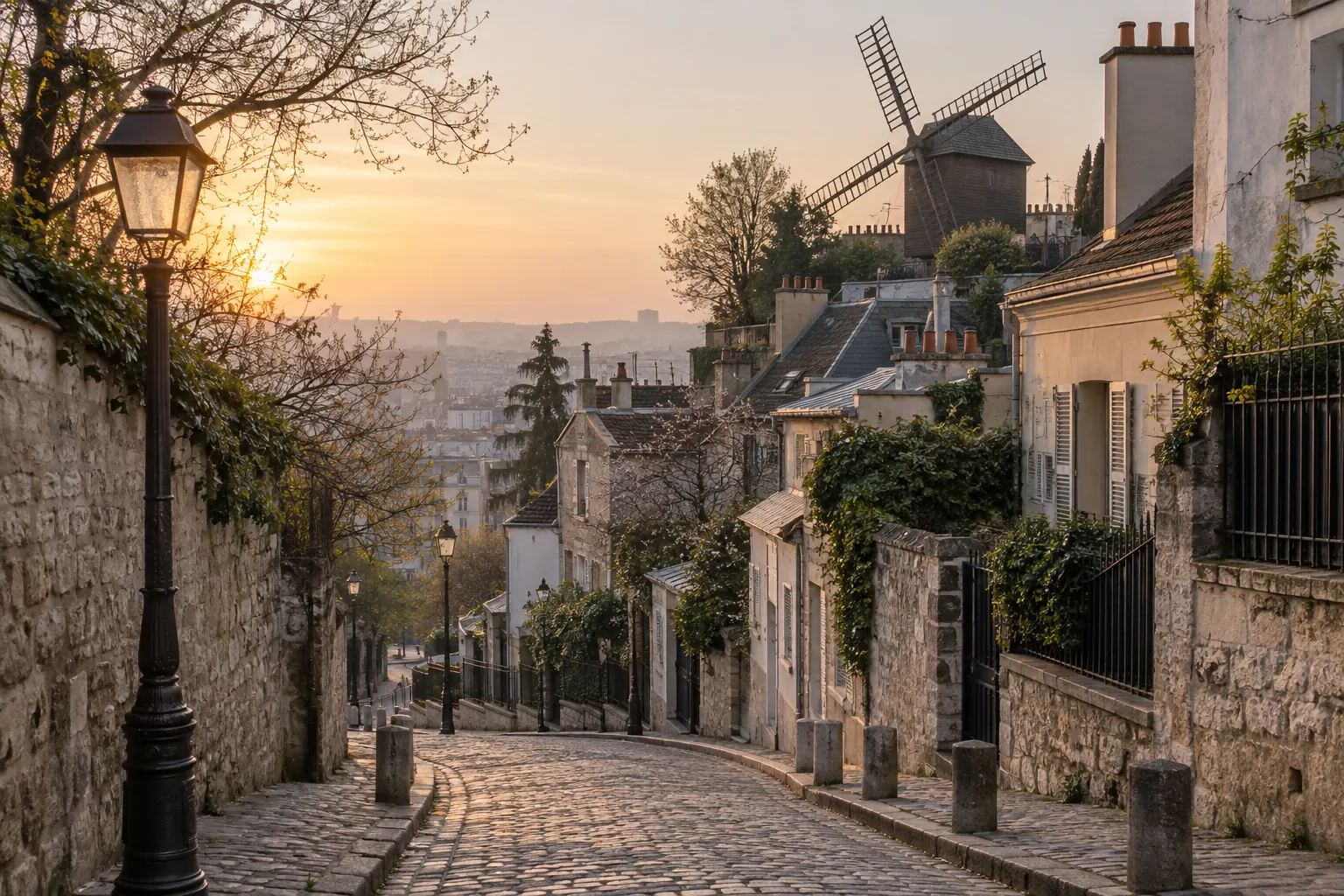
Sloping Montmartre street with an old windmill at sunrise

01 · The village, its history and its people

Montmartre

Understanding the hill before exploring it means rediscovering the former commune annexed to Paris in 1860, its quarries, mills, vineyard and streets where a distinctive popular culture took shape. Artists gave Montmartre worldwide fame, but the district is more than bohemia or a postcard setting. Behind its photographed façades lies a living neighbourhood of schools, shops, associations, everyday habits and strong local memory.

Understand and choose

The village, its history and its people

Understanding the hill before exploring it means rediscovering the former commune annexed to Paris in 1860, its quarries, mills, vineyard and streets where a distinctive popular culture took shape. Artists gave Montmartre worldwide fame, but the district is more than bohemia or a postcard setting. Behind its photographed façades lies a living neighbourhood of schools, shops, associations, everyday habits and strong local memory.

Each subsection brings together essential pointers, clear explanations, addresses and ideas for further discovery. Read the whole page as a short feature or go directly to the topic that interests you. Information likely to change — hours, prices, programmes, access or booking — is linked to official sources so you can check before travelling.

The selection favours varied experiences and understanding the district. It does not attempt to rank everything or impose one route: Montmartre is also discovered according to the weather, the day’s energy, your companions and encounters along the way.

01

Montmartre

History of Montmartre

Before becoming a Paris district, Montmartre was a commune of farmland, gypsum quarries, windmills and entertainment beyond the capital’s tax barriers. Annexation in 1860 placed it in the new 18th arrondissement without erasing its landscape or temperament. The Paris Commune in 1871, followed by artists, workers and cabarets in the late nineteenth century, gave the hill a political, popular and artistic history. Reading these layers reveals far more than a picturesque view.

02

Montmartre

Map & access

Montmartre is best understood as several slopes rather than a single point to reach. Abbesses and Lamarck–Caulaincourt on line 12 open onto the centre and north of the hill; Anvers and Pigalle on line 2 approach from below. The funicular avoids the main steps through square Louise-Michel, while smaller streets offer gentler climbs. Planning the direction of your walk saves energy and helps you leave the most crowded routes.

03

Montmartre

Artists & famous residents

Renoir painted the dance at Moulin de la Galette; Suzanne Valadon and Maurice Utrillo lived and worked on the hill; Picasso settled at the Bateau-Lavoir, where poor studio conditions did not prevent an intense exchange of ideas. Toulouse-Lautrec, Modigliani, Steinlen, Poulbot and many others observed cabarets, streets and residents. Their work created a legend, while also recording a working-class district where creativity mixed with ordinary life.

04

Montmartre

Clos Montmartre and its vines

At 14 rue des Saules, Clos Montmartre keeps a working vineyard on the northern slope of the hill. View it from rues des Saules and Saint-Vincent; entry to the enclosure depends on separately announced tours or events. The City tends the vines year-round. Continue to Musée de Montmartre on rue Cortot to place this landscape in the district’s wider history.

05

Montmartre

Studios beyond the legend

The Bateau-Lavoir and places associated with Valadon or Utrillo recall how art also grew out of low rents and everyday solidarity. Present-day studios are not all open to visitors: look for advertised open-studio days and exhibitions. Observe private buildings from the street and respect residents. Musée de Montmartre places these artists and their work in the neighbourhood’s wider history.

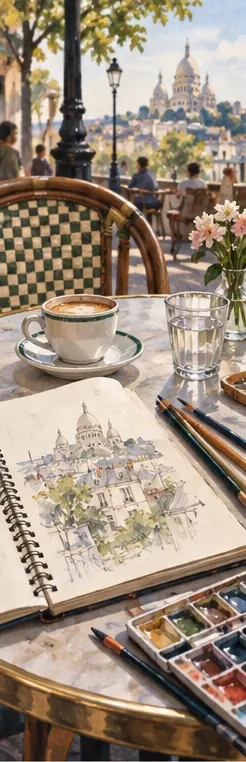
Editorial illustration: Studios beyond the legend
06

Montmartre

Montmartre Cemetery

The cemetery below the hill offers a heritage walk quite different from place du Tertre. Its paths, monuments and trees invite a slow, quiet visit. Check the entrance and current opening hours on the City of Paris listing before setting out, as they vary by season. A grave is a place of remembrance: remain on the paths, avoid intrusive photographs and leave space for families.

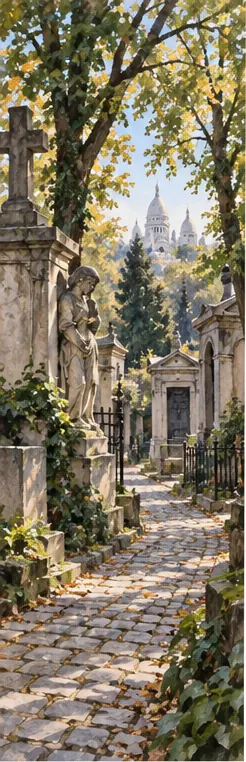
Editorial illustration: Montmartre Cemetery

Useful questions

Before you decide.

These answers connect the section’s themes to practical decisions. For current hours, access and programmes, always return to the venue’s source.

Why do Montmartre streets not form a regular grid?+

The hill, former quarries, old village paths and gradual urban growth left curved streets, steps and irregular plots. To understand an area, look at the slope and retaining walls rather than searching for the shortest straight line.

How is the hill connected to the Paris Commune of 1871?+

An attempt to recover National Guard cannon on the heights triggered the uprising of 18 March 1871. Events then involved the whole city. The hill’s streets help place the beginning of the story, though physical remains of the Commune are scarce.

Explore the guide →
Can all Montmartre cemeteries be visited in the same way?+

No. The large Montmartre Cemetery is entered from avenue Rachel, Saint-Vincent is on rue Lucien-Gaulard, and the Calvaire beside Saint-Pierre has very limited access. Consult each City listing and remember these places also serve grieving families.

Explore the guide →

Compare and decide

Three scales for understanding Montmartre

Your choicePlan forCheck this
The hillTerrain, summit and old pathsRead a map before choosing stairways
The former communeHistory before and after the 1860 annexationCompare historic maps with today’s streets
The 18th todayAreas and facilities beyond the hillDistinguish the arrondissement from the tourist area