The independent portal for Montmartre

GuidesEventsFilm & booksPractical infoDirectory
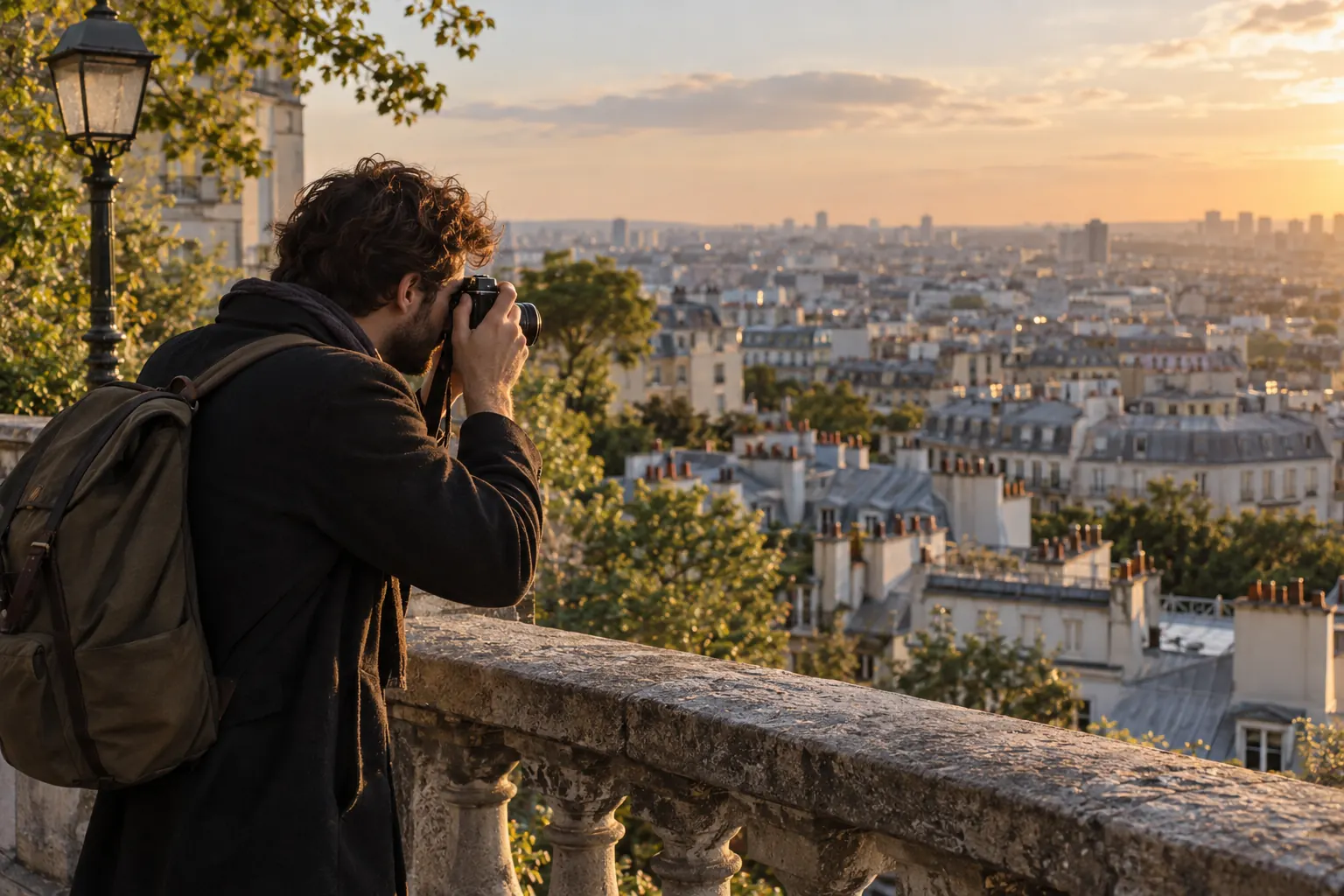
Photographer framing the Paris rooftops from Montmartre

07 · The neighbourhood’s visual archive

Photos & videos

The gallery offers Atmosphere illustrations evoking Montmartre streets, gardens and cultural life. Links to public collections provide access to documented works and archives. Looking at Montmartre in different eras reveals both neighbourhood change and the persistence of certain views, trades and uses. This section combines photography, painting, film, literature and music to place famous images within a broader memory.

Understand and choose

The neighbourhood’s visual archive

The gallery offers Atmosphere illustrations evoking Montmartre streets, gardens and cultural life. Links to public collections provide access to documented works and archives. Looking at Montmartre in different eras reveals both neighbourhood change and the persistence of certain views, trades and uses. This section combines photography, painting, film, literature and music to place famous images within a broader memory.

Each subsection brings together essential pointers, clear explanations, addresses and ideas for further discovery. Read the whole page as a short feature or go directly to the topic that interests you. Information likely to change — hours, prices, programmes, access or booking — is linked to official sources so you can check before travelling.

The selection favours varied experiences and understanding the district. It does not attempt to rank everything or impose one route: Montmartre is also discovered according to the weather, the day’s energy, your companions and encounters along the way.

01

Photos & videos

Photo gallery

A visual walk compares seasons, hours and faces of the hill. Morning reveals street lines and shop work; rain draws out the cobbles; winter opens views hidden by summer foliage. Archives also show a neighbourhood of work, childhood and community, far beyond panoramic views. When photographing today, frame patiently without disturbing residents or turning a doorway into a stage set.

02

Photos & videos

Montmartre in art

Renoir, Utrillo, Valadon, Toulouse-Lautrec, Steinlen and their contemporaries did not paint the same Montmartre. Some captured dances, others façades, popular figures, cabarets or the city’s margins. Posters and paintings spread an instantly recognisable image, sometimes more famous than the real district. Public collections and Musée de Montmartre let visitors return to the works, dates and contexts beyond the legend.

03

Photos & videos

Videos

Home movies, historic newsreels, interviews and filmed walks preserve gestures still photography cannot: a market setting up, an artist working, steps being climbed, a neighbourhood celebration. Audiovisual archives should be read with their date and source, since they show a particular moment rather than a final truth. Contemporary videos also benefit from slowing down and letting the district be heard instead of merely ticking off famous sights.

04

Photos & videos

Montmartre on screen

From silent cinema to Amélie, from Renoir to film noir and international productions, Montmartre serves as both setting and character. Its steps create movement, narrow streets bring figures together and cabarets allow every shift in tone. Yet each film rebuilds geography in its own way: two adjacent shots may have been filmed streets apart. Watching the works before a walk turns the visit into a game of memory and observation.

05

Photos & videos

Books & writers

Marcel Aymé, Francis Carco, Pierre Mac Orlan and many less famous voices gave the district a literary geography of boarding houses, cafés, alleys, poverty and friendship. Artists’ memoirs complement novels by describing studios and bohemian solidarity without always idealising them. Reading a chapter on location changes the perception of a street. Libraries and digital collections now make out-of-print works and contrasting accounts accessible.

06

Photos & videos

Songs of the hill

Before records, songs circulated through cafés-concerts, cabarets and streets. Aristide Bruant established a language and silhouette; La Complainte de la Butte prolonged the district’s nostalgia; Aznavour and other performers maintained that memory through the twentieth century. Listening means hearing both poetic invention and social record. Popular refrains fixed accents, trades and places the landscape alone can no longer explain.

07

Photos & videos

Photograph without intruding

Montmartre’s stairs, curves and viewpoints invite photographs, but they are also routes and private neighbourhood spaces. Use morning or evening light, vary your viewpoint and look for a foreground instead of blocking a path to recreate the same shot. Ask identifiable people for consent, particularly inside shops, and follow the rules of churches, museums and gardens.

Editorial illustration: Photograph without intruding
08

Photos & videos

Find the district in the archives

Old maps, photographs and newspapers help separate lived Montmartre from its visitor image. Start with a street name or precise place, then compare several dates: a familiar façade may have served a very different purpose. Public libraries and archives explain viewing and reuse rights; check them before publishing an old image, even if it already circulates online.

Editorial illustration: Find the district in the archives

Useful questions

Before you decide.

These answers connect the section’s themes to practical decisions. For current hours, access and programmes, always return to the venue’s source.

Can I freely reuse an old Montmartre photograph?+

Not automatically. The age of the scene alone says nothing about rights in a photograph or its digital reproduction. Read the holding institution’s record and reuse terms before publishing it.

Do films show the district’s real geography?+

Not always. Editing can join streets that are far apart, and a scene may combine real locations with sets. Use a film as a cultural starting point, then verify locations with archives or documented production sources.

How can I photograph without disturbing residents?+

Stay in public space without blocking doorways, narrow pavements or steps. Ask identifiable people for permission and follow rules in museums, gardens and churches. A slower photograph away from the main route may tell a better story.

Explore the guide →

Montmartre atmospheres in illustrations

Illustrations depicting walks and neighbourhood heritage.

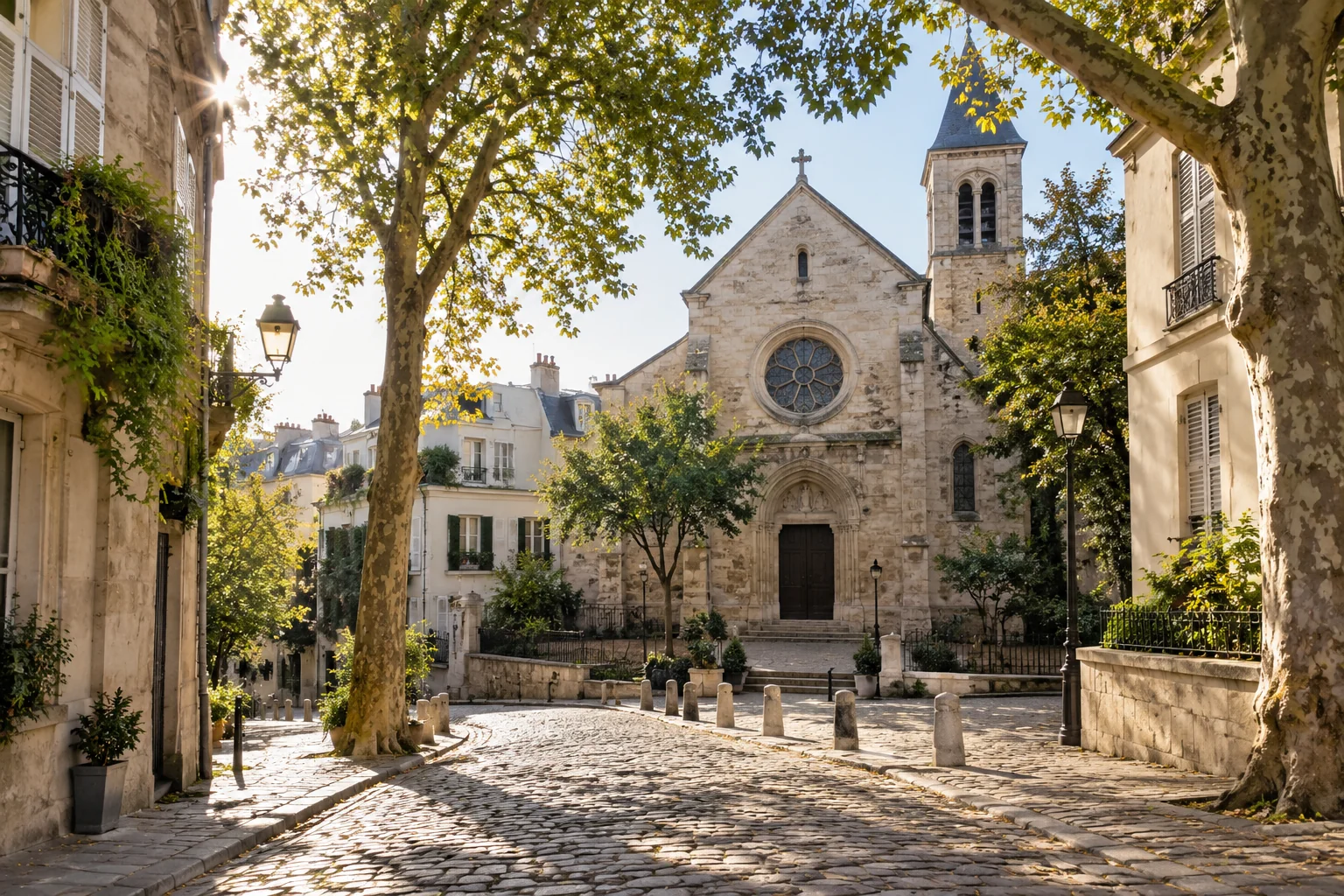
Illustration: A square and church evoking Montmartre heritage
A square and church evoking Montmartre heritage — AI-generated atmosphere illustration, not a guaranteed depiction of a specific place.
See the illustration gallery →

Compare and decide

Build a documented picture of the neighbourhood

Your choicePlan forCheck this
Current photographyAn identifiable place and dateAsk permission for people and interiors
ArchiveCreator, place, date and rightsUse the source caption without inventing an address
Atmosphere visualEditorial illustrationDo not use it as proof of a place, product or event