The independent portal for Montmartre

GuidesEventsFilm & booksPractical infoDirectory
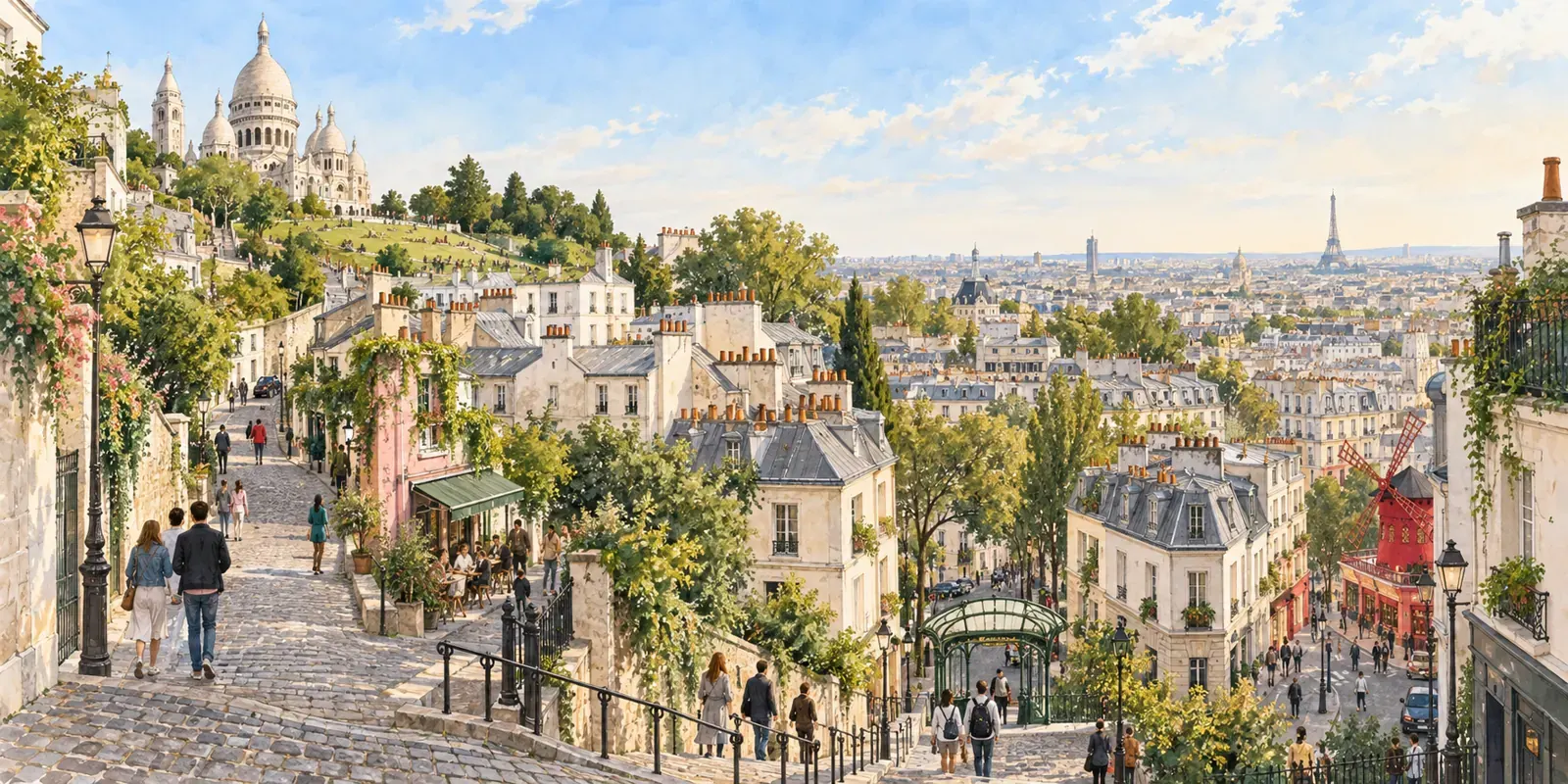
Editorial illustration of Montmartre streets and roofs near Sacré-Cœur

Six areas · one living district

Montmartre, area by area.

From the summit to Goutte d’Or, choose an area that suits your time, mobility and interests. Each place has its own pace and daily life.

Find your bearings

The hill is more than one stop.

The summit, Abbesses and Pigalle look close on a map, but their slopes, atmospheres and opening times differ. On a first visit, pair two neighbouring areas. A full day allows a museum, a break and a detour to the northern slope or another part of the 18th. The illustrations below convey each area’s atmosphere; they do not document a particular address.

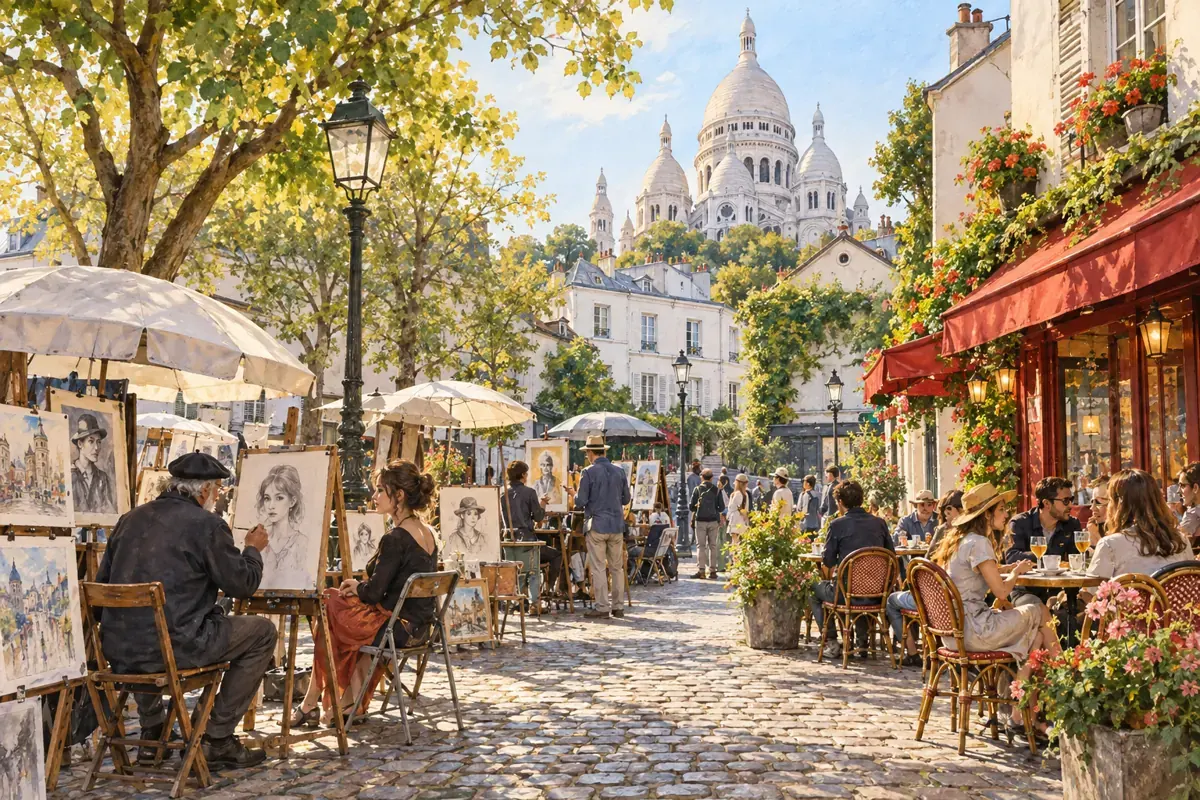
Editorial illustration: The summit and Place du Tertre
Sacré-Cœur · Tertre · rue Cortot

Sacré-Cœur · Tertre · rue Cortot

The summit and Place du Tertre

This is Montmartre’s best-known area: the Sacré-Cœur forecourt, artists at Place du Tertre and streets near the Musée de Montmartre. It is compact, yet queues, cobbles and crowds slow a visit. Make time for Saint-Pierre church, then leave the busiest routes by rue Cortot. The basilica is a place of worship; entry and dome visits have different conditions.

Arrival: Anvers or funicular; many slopes and steps.

Three local landmarks

  • Église Saint-PierreThe church beside place du Tertre recalls the former abbey’s history, separate from that of Sacré-Cœur.
  • Rue CortotMusée de Montmartre and its gardens give context to former studios and works created on the hill.
  • Square NadarThis small viewpoint near the funicular offers another angle; check whether the garden is open.
Explore places and addresses →Follow the area guide →
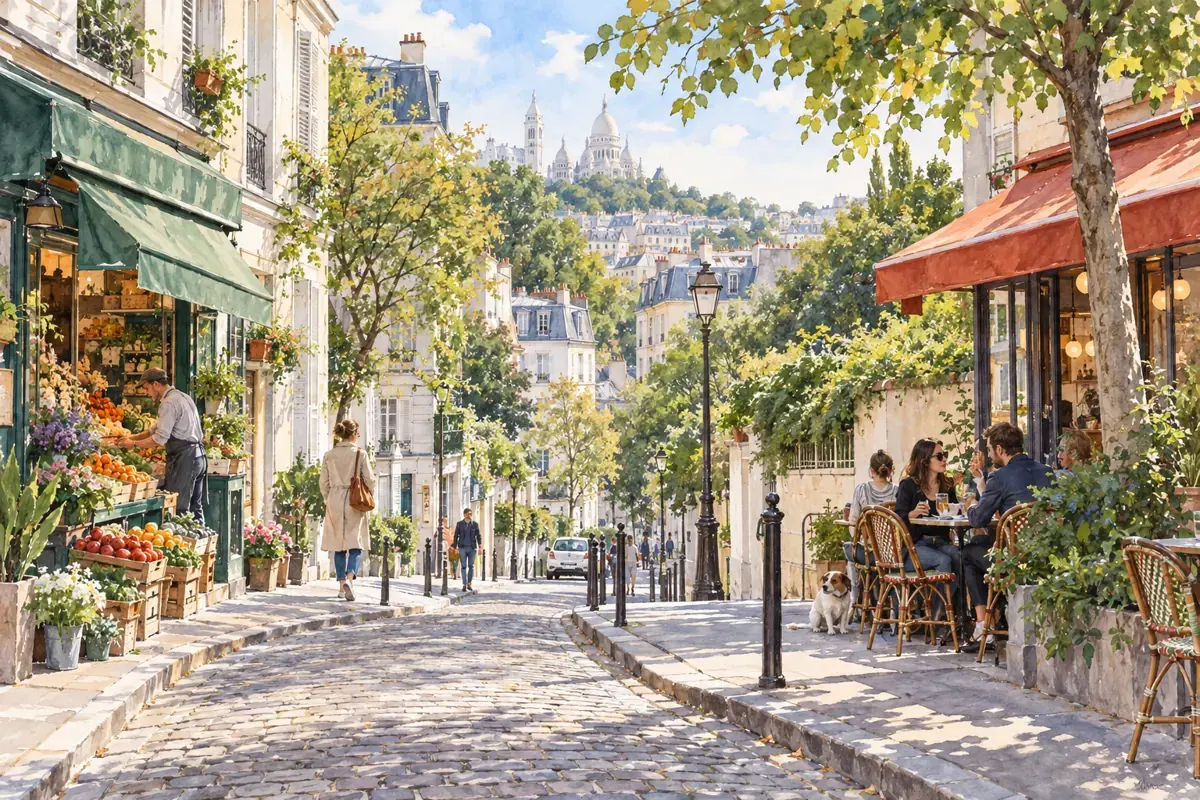
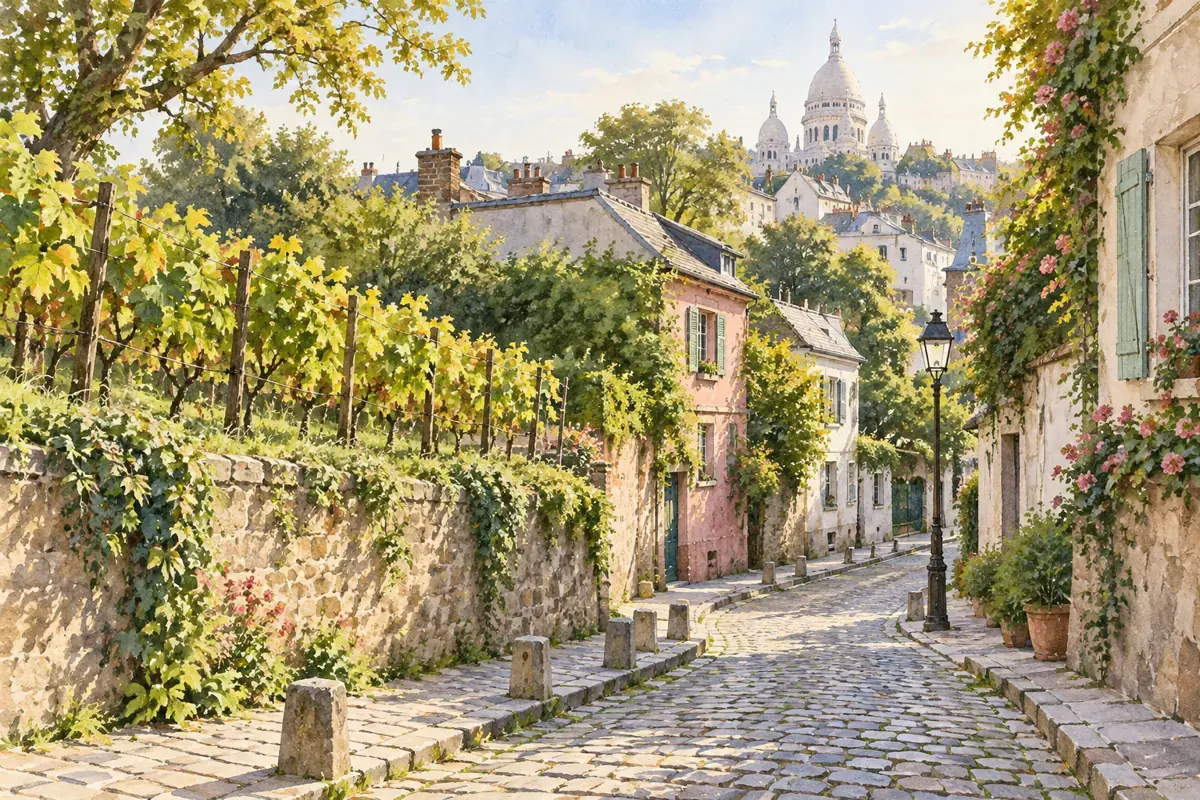
Editorial illustration: The northern slope and vineyard
Rue des Saules · Saint-Vincent · Abreuvoir

Rue des Saules · Saint-Vincent · Abreuvoir

The northern slope and vineyard

The northern slope retains residential streets, gardens and views of Clos Montmartre. Rue de l’Abreuvoir leads toward Place Dalida; higher up, rue Saint-Vincent follows the vineyard. You can see the vines from the street, while access inside depends on special visits or occasions. Explore on foot, preferably early in the day, and respect residents and building entrances.

Arrival: Lamarck–Caulaincourt; cobbled, hilly route.

Three local landmarks

  • Clos MontmartreSee the vineyard from rues des Saules and Saint-Vincent; the enclosure is not freely accessible.
  • Cimetière de Saint-VincentOn rue Lucien-Gaulard, this small cemetery is separate from the larger Montmartre Cemetery near Blanche.
  • Jardin sauvage Saint-VincentThis biodiversity garden opens only for selected organised visits: check with the City before going.
Explore places and addresses →Follow the area guide →
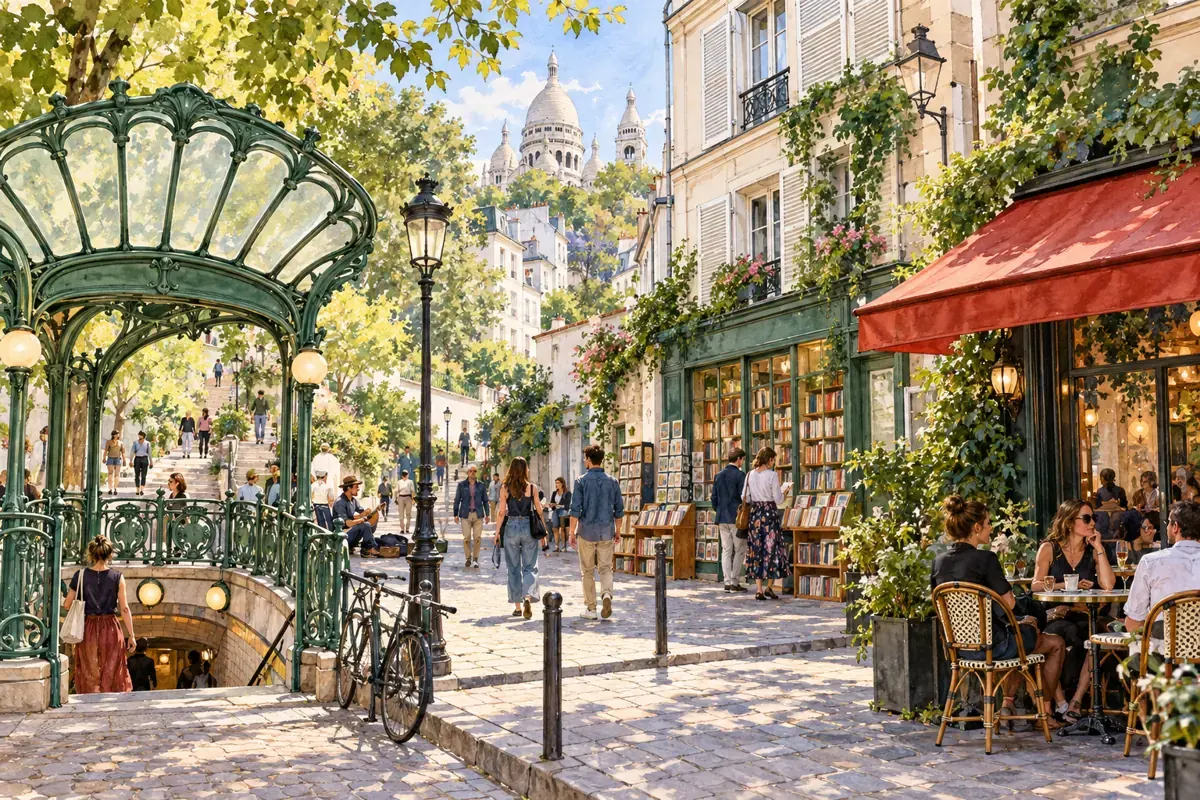
Editorial illustration: Abbesses and rue Lepic
Place des Abbesses · rue Lepic · Bateau-Lavoir

Place des Abbesses · rue Lepic · Bateau-Lavoir

Abbesses and rue Lepic

Around Place des Abbesses, cafés, shops and residential streets extend a summit visit. Rue Lepic combines market life with the history of the windmills; Place Émile-Goudeau recalls the Bateau-Lavoir studios. Abbesses metro station has deep stairs, so the lift may be more comfortable. Access to the Wall of Love and Square Jehan-Rictus may be restricted; check the City listing before going.

Arrival: Abbesses, line 12; deep station.

Three local landmarks

  • Saint-Jean de MontmartreOpposite square Jehan-Rictus, its brick and ceramic provide an architectural contrast with the summit.
  • Bateau-LavoirPlace Émile-Goudeau locates this artists’ residence, still used as studios: do not assume open access.
  • Square Jehan-RictusAccess to the Wall of Love can be restricted; check the City listing before making it the focus of a detour.
Explore places and addresses →Follow the area guide →
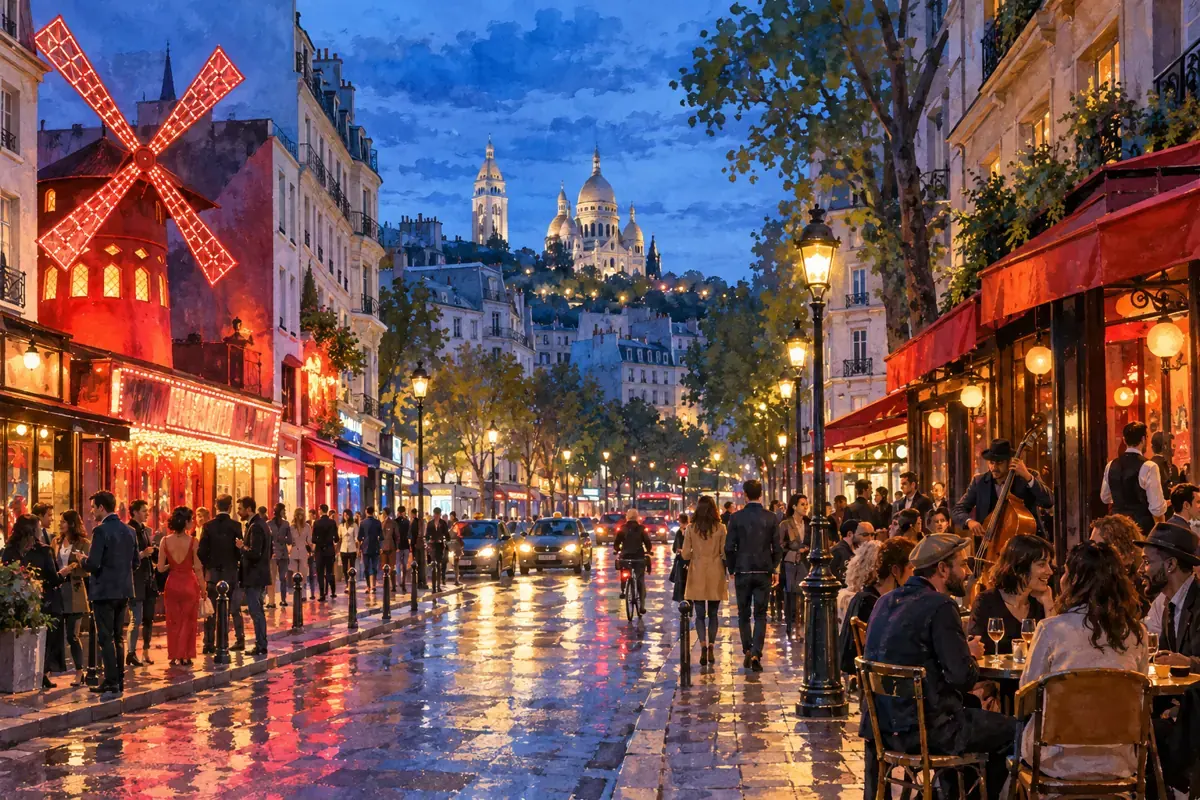
Editorial illustration: Pigalle and the southern stages
Boulevard de Clichy · Blanche · rue des Martyrs

Boulevard de Clichy · Blanche · rue des Martyrs

Pigalle and the southern stages

At the foot of the hill, Pigalle connects theatres, cinemas, concert venues and shopping streets. Its atmosphere changes markedly from morning to evening. Check venue programmes before planning a night out and confirm transport times for the return. Cultural places extend beyond the boulevard’s major names into smaller stages and bookshops on nearby streets.

Arrival: Pigalle or Blanche; busy boulevard traffic.

Three local landmarks

  • Boulevard de ClichyThis main road brings together transport and major venues; cross it to explore smaller spaces on nearby streets.
  • Salles de spectacleTheatre, film, concerts and cabaret keep different calendars: choose the performance first.
  • Rue des MartyrsThis shopping street connects Pigalle with neighbouring areas and suits a downhill finish after the hill.
Explore places and addresses →Follow the area guide →
Editorial illustration: Lamarck and Caulaincourt
Lamarck · avenue Junot · Grandes-Carrières

Lamarck · avenue Junot · Grandes-Carrières

Lamarck and Caulaincourt

This side of the hill mixes sloping streets, neighbourhood cafés and routes toward gardens. It offers a gentler approach than the direct climb from Anvers. Avenue Junot shows another face of Montmartre, while streets in Grandes-Carrières lead toward Montmartre Cemetery. A walk here connects heritage with everyday life without trying to fit every monument into one hour.

Arrival: Lamarck–Caulaincourt, line 12; slopes vary by route.

Three local landmarks

  • Avenue JunotIts route and façades offer a more residential walk between the hill and Grandes-Carrières.
  • Square Suzanne-BuissonThis terraced garden near rue Girardon can provide a break with play space and boules.
  • Cimetière de MontmartreIts entrance on avenue Rachel lies below the summit; prepare your visit with the City map.
Explore places and addresses →Follow the area guide →
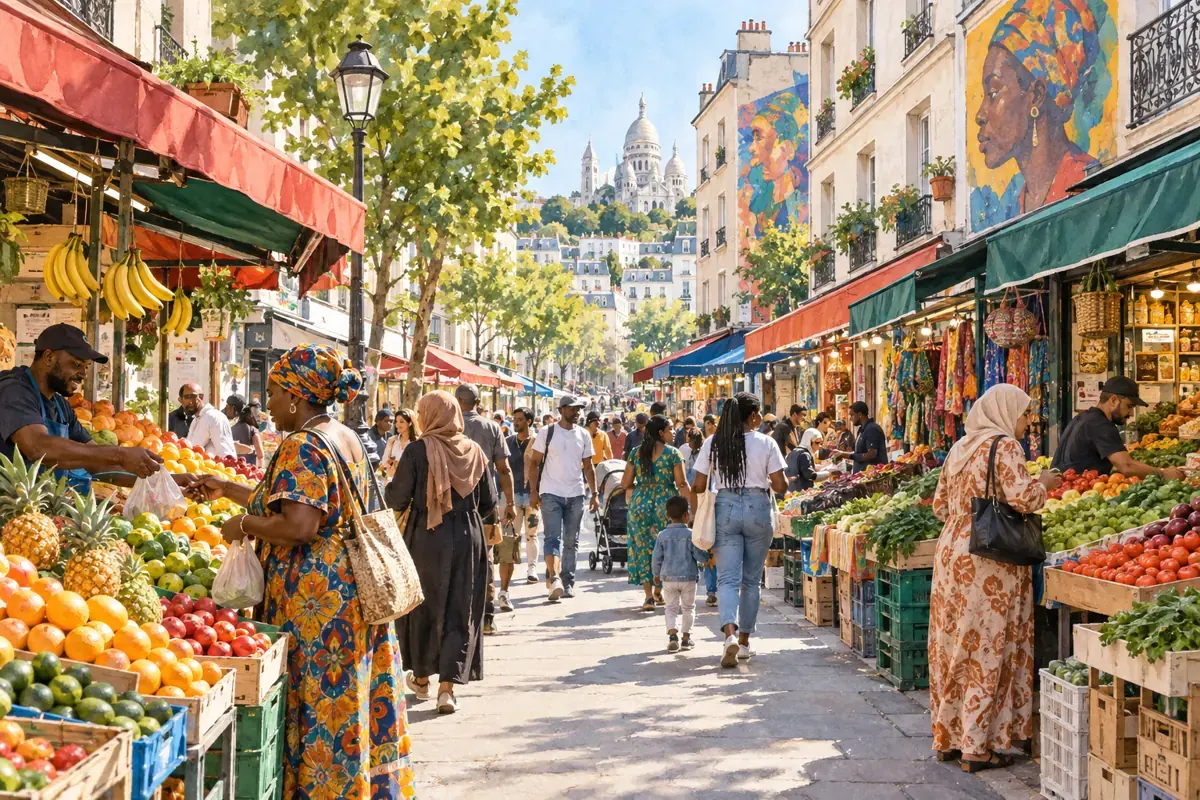
Editorial illustration: Château Rouge and Goutte d’Or
Rue Dejean · Barbès · Goutte d’Or

Rue Dejean · Barbès · Goutte d’Or

Château Rouge and Goutte d’Or

East of the hill, Goutte d’Or has its own markets, shops, studios and cultural venues. It deserves an attentive visit on its own terms, guided by local businesses and resources. Rue Dejean is especially lively during market hours. Respect stalls, ask before photographing anyone and allow time to explore streets beyond the main route.

Arrival: Château Rouge, line 4, or Barbès–Rochechouart.

Three local landmarks

  • Institut des Cultures d’IslamOn rue Léon, its exhibitions and talks offer a public cultural entry point to the neighbourhood.
  • Bibliothèque Goutte d’OrOn rue Fleury, it offers reading, study and activities with hours set by the City calendar.
  • Lavoir Moderne ParisienThis independent venue on rue Léon hosts new work: check its programme before visiting.
Explore places and addresses →Follow the area guide →

Continue exploring

Plan your route.

A full itinerary, guides for the time you have and a searchable directory turn these bearings into a practical visit.

Pair the areas

Three ways to shape your visit.

These suggestions give you an order of travel. Timing depends on indoor visits, breaks, hills and crowds.

01 · About 2 hours

Summit then northern slope

Start at Sacré-Cœur, pass Saint-Pierre and Place du Tertre, then take rue Cortot. Descend toward the vineyard by rue Saint-Vincent and finish near Lamarck–Caulaincourt. Save museum visits for a longer outing. Cobbles and slopes call for comfortable shoes.

02 · Half a day

Abbesses, summit and museum

Start at Abbesses, climb via rues Lepic and des Trois-Frères, then allow time for the Musée de Montmartre and Renoir Gardens. Return by the northern slope or head back to Abbesses shops. Check museum hours and access before booking.

03 · Full day

From market to stage

Spend the morning on northern streets or at an 18th-arrondissement market, then pause around Abbesses. Keep the afternoon for a museum or a slower walk. Finish in Pigalle with a film, show or concert whose programme you have confirmed.

Practical questions

Before choosing where to start.

Which area for a first visit?

The summit and Abbesses offer the best-known landmarks. With two hours, stay on the summit and one slope; with half a day, add a museum or nearby area.

Where can I walk more quietly?

The northern slope and streets around Lamarck are often calmer than the Sacré-Cœur forecourt and Place du Tertre, especially in the morning. This varies by day and event.

Can I avoid stairs?

The funicular avoids steps on its section between the foot and summit. Streets remain steep and sometimes cobbled. Check venue accessibility and current transport status before setting out.

Is Goutte d’Or part of Montmartre?

Goutte d’Or is a distinct neighbourhood of the 18th arrondissement, east of the hill. This guide includes it to help you explore the surroundings while recognising each area’s own identity.

Compare and decide

Compare areas against your needs

Your choicePlan forCheck this
SummitLandmarks and panoramaPlan for slopes, stairs and crowds
Abbesses–LepicShops and breaks along the routeCheck an exact address instead of searching around a station
Jules-Joffrin / Goutte d’OrLocal life and 18th-arrondissement venues beyond the summitPlan a separate journey; not every Paris 18th listing is on the hill