Sewing and interiors · Guide 2026
Buying fabric in the Saint-Pierre district
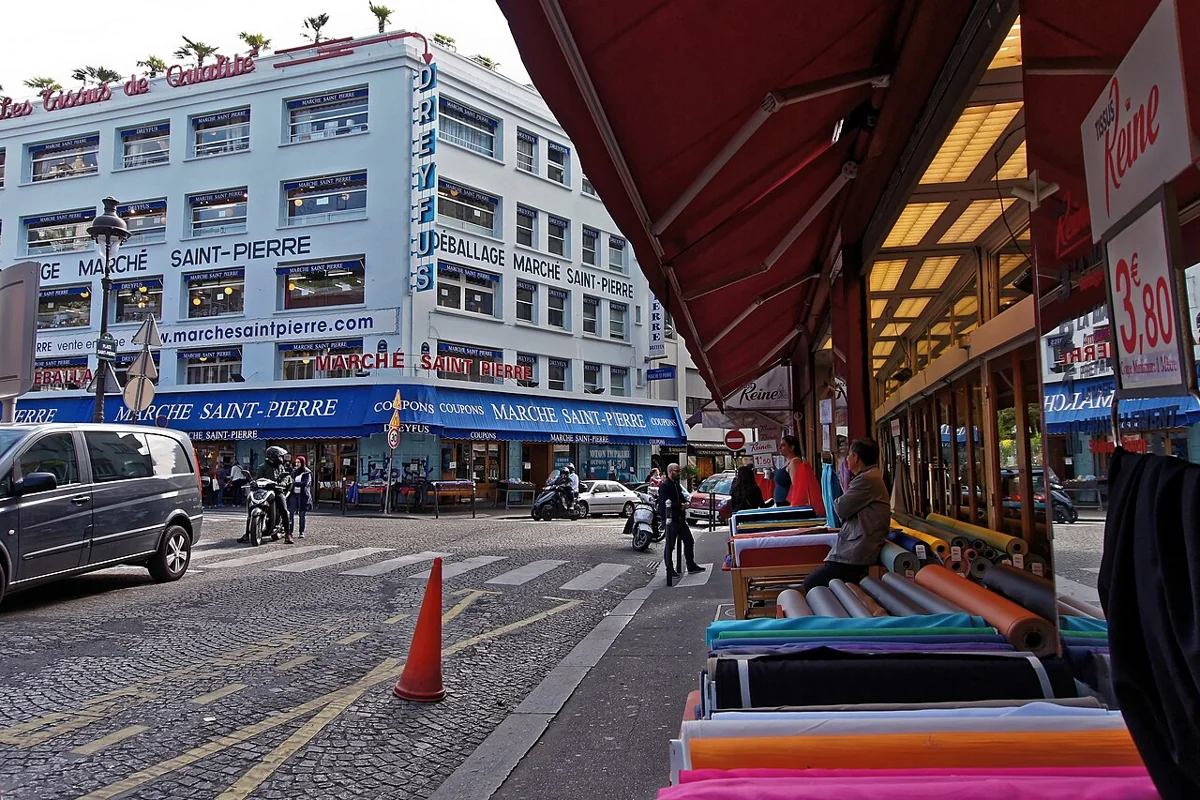
Marché Saint-Pierre refers to both a textile district and a particular shop. Stores cluster around streets including Charles-Nodier, Livingstone and d’Orsel. This is not a food market. Bring your project, measurements and a material idea to compare products serving the same purpose.
Date listed by the source: 2018-10-09 14:41. Resized and converted to WebP. This image does not establish the venue’s present condition.
The short answer
What matters before you go.
Compare fabrics by fibre content, width, price per metre and care instructions. For remnants, check the actual length and look for flaws. Compare how much usable fabric you will have for your pattern, taking the width into account.
Action plan
The route,
step by step.
Times and order are guideposts. Always adapt the visit to crowds, actual access and your group’s energy.
Prepare the project
Note your pattern’s recommended quantity, assumed width and pattern direction. For curtains, record dimensions and intended finish. A seller can advise with these details; a colour idea alone cannot determine the quantity.
Examine the material
Ask for composition and care instructions. Examine drape, transparency and direction. Cloth suited to a jacket may lack the properties needed for curtains or a dress. Compare references, not only colours.
Calculate the complete cost
Compare required quantity, notions and cutting waste. For a remnant, consider the usable piece. Insufficient length may require a second purchase; a low price does not automatically make it suitable.
Check before cutting
Confirm reference, quantity and visible flaws with the seller. Ask which purchase conditions apply and retain the label to identify the material. For several pieces, check colour and pattern consistency before cutting.
Understand more · choose well
A purchase that tells the story of your visit.
A link to Montmartre can come from the maker, production, subject or shop location. Ask a few questions to understand the purchase and choose something that also suits your journey home.
Creation and origin
Ask who designs, makes or assembles the object. “Sold in Montmartre” and “made in Montmartre” describe different things. For a handmade piece, check materials, care and lead time for commissions.
Fabric: prepare your measurements
Bring dimensions, seam allowance and a colour reference. Compare price per metre, usable width and composition. Ask about shrinkage and returns for cut fabric; do not assume the same terms as a packaged product.
Portrait: agree before the sitting
Agree on total price, technique, format, number of people and estimated time. Look at examples of the artist’s work and ask how to protect the finished piece for travel. A portrait made on site is an encounter as well as a souvenir.
Useful trade-offs
What really changes the visit.
One district, several calendars
Each shop has its own hours. The Marché Saint-Pierre website lists Sunday closure and slightly differing weekday hours across sections: confirm when arriving near closing time.
Shop near the end of your visit
A large bag makes the climb less comfortable. When hours permit, walk before shopping and return to transport from the foot of the hill.
Practical questions
Before confirming the route.
What is fabric width?+
It is the width of the cloth. Together with length, it determines whether pattern pieces fit in the purchased material.
Is a remnant always good value?+
Compare usable quantity, flaws and intended use. A piece may cost less but still be unusable for the project.
Do all shops keep the same hours?+
No. Consult the chosen business; one shop’s hours do not describe the whole district.
Check on the day
Official and practical sources.
Hours, outages, works, prices and access conditions change. For any important requirement, check the relevant source and contact the venue directly.