
Anvers
Halle Saint-Pierre
Exhibition centre dedicated to art brut, outsider and singular art, with a bookshop and café.
2 rue Ronsard
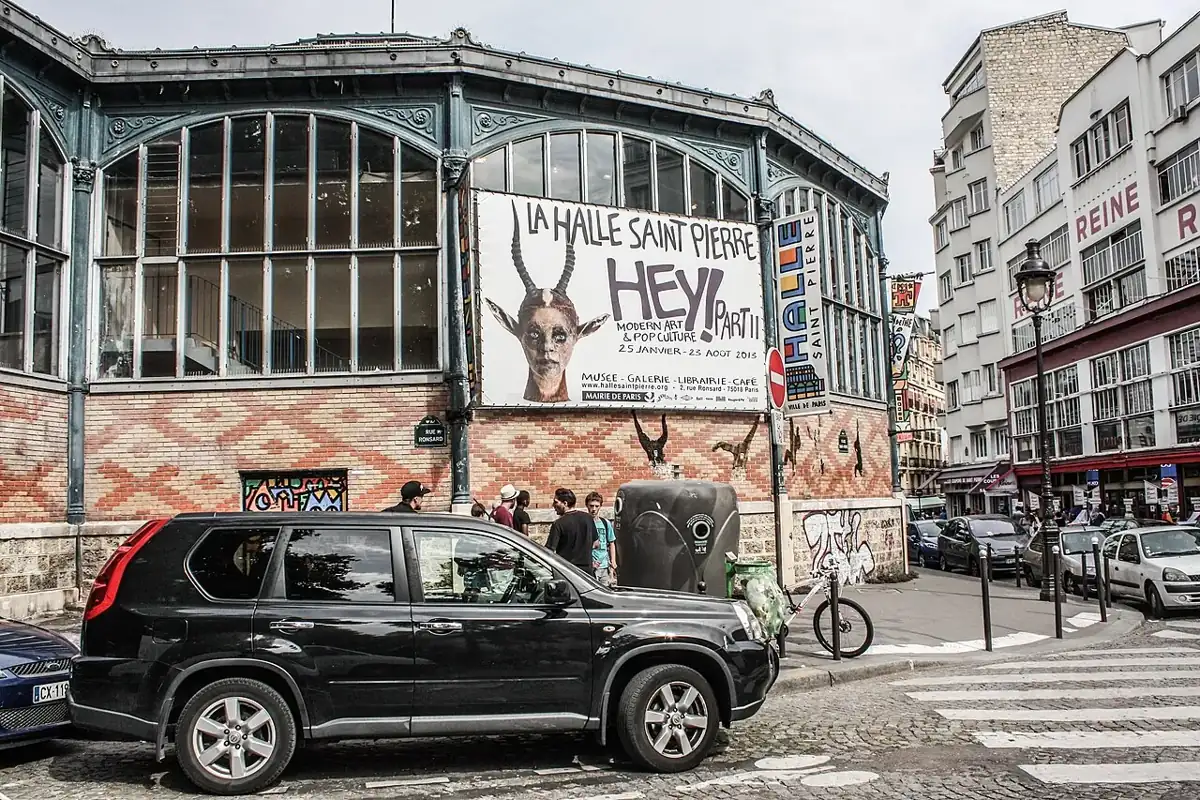
Date listed by the source: 2013-08-22 16:05. Resized and converted to WebP. This image does not establish the venue’s present condition.
What to know before visiting
The Halle contains exhibition galleries, a bookshop and a café. The ticket desk and café close one hour before the museum. Pushchairs are allowed in common areas and stay outside the exhibitions. The Halle lists an August closure. Check the current exhibition and opening hours before visiting.
Look closer
Details that tell the story of a place
1868 · 1986
Inaugurated on 2 January 1868, this hall first housed a covered market, disused from 1921. It became a cultural venue in 1986.
Look for. Compare the hall’s frame with the spaces an exhibition needs. The building and the works on display belong to two histories worth reading together.
Conseil de Paris · 2025 DAC 403 (PDF) ↗Recorded check date for this page: . Hours, restrictions and services may change.
Visiting questions
Does the photograph advertise the current exhibition?
No. The photograph is dated; only the official programme identifies the current exhibition.
What’s on at this venue
- Art Brut Ressourcé — La « S » Grand Atelier · Until 31 July 2027
Understand more · choose well
From a famous address to artists’ work.
A studio, a garden and an artwork tell different stories. Connect addresses to collections, then take time to look at the paintings: the visit becomes more precise than a sequence of famous names.
Renoir: a garden as a starting point
Musée de Montmartre places Renoir’s stay here between 1875 and 1876. Today’s gardens invite connections between light, foliage and painting; they are not an untouched nineteenth-century setting.
Musée de Montmartre — museum and gardens ↗Valadon: recognise an artist in her own right
The museum describes her arrival on rue Cortot in 1912 with Maurice Utrillo and André Utter. Look at her works for their composition, figures and colour, rather than reducing her role to a model or a painter’s mother.
Musée de Montmartre — museum and gardens ↗Outside a former artists’ residence
A façade and plaque offer a landmark, not admission to studios. Choose a question to observe: how does light enter, where is the courtyard, how does the building fit the slope? Look for answers from public space.
Continue with another stop
- Square Louise-Michel — 6 place Saint-Pierre · Anvers
- La Cigale — 120 boulevard de Rochechouart · Anvers
- Le Trianon — 80 boulevard de Rochechouart · Anvers
- Élysée Montmartre — 72 boulevard de Rochechouart · Anvers
Routes using this place detail
- Visit Montmartre in the rain — For a rainy day
- Visit Montmartre in winter — Seasonal visit
- Which museum should you choose in Montmartre? — Collections and exhibitions
- Buying fabric in the Saint-Pierre district — Sewing and interiors
- Funicular: tickets, payment and choosing your climb — Avoid ticket mistakes