The independent portal for Montmartre

NewsGuidesEventsFilm & booksPractical infoDirectory
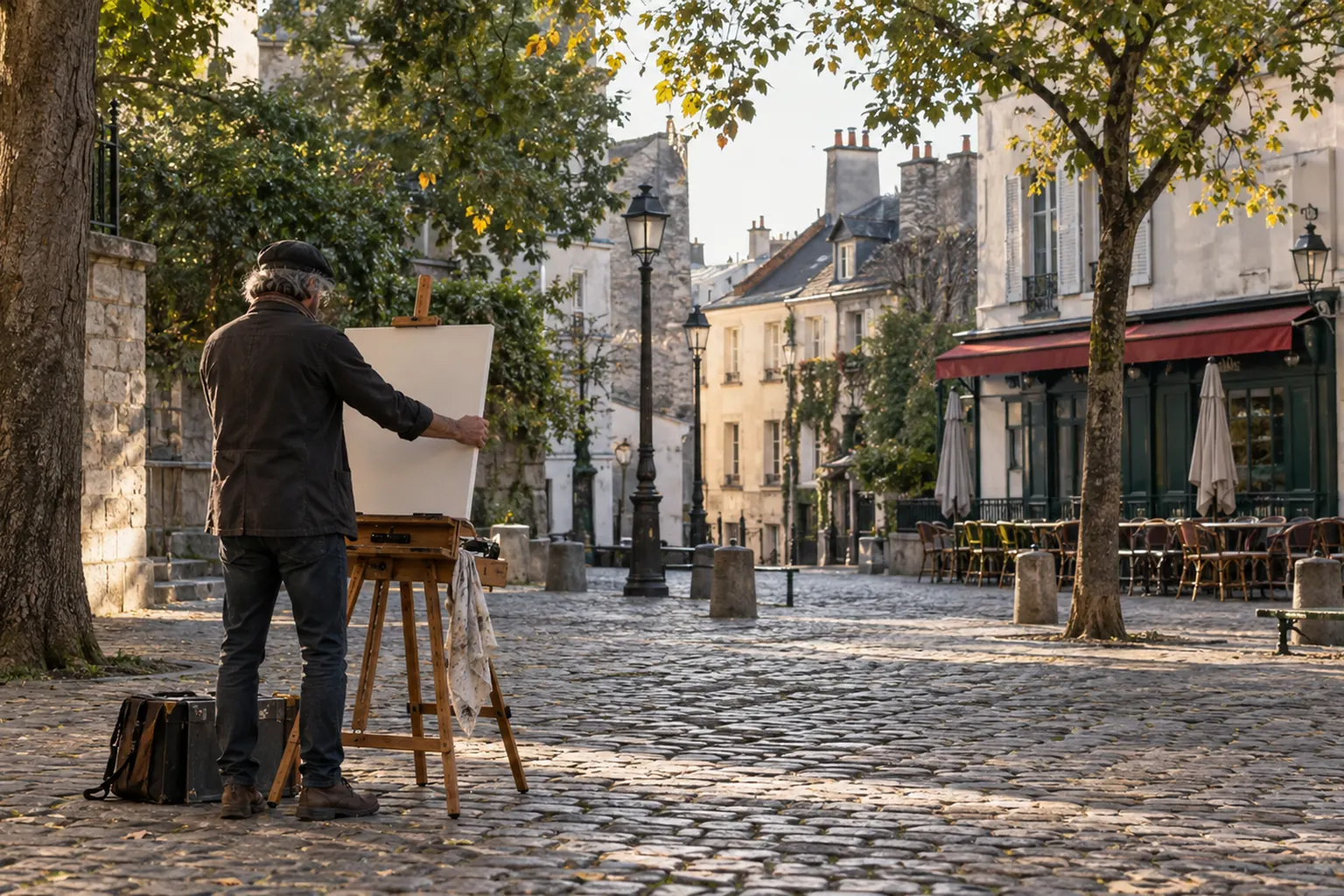
Artist setting up an easel on a quiet Montmartre square

History & heritage

Discover Montmartre

A former commune annexed to Paris, once a land of quarries, mills and festivities, Montmartre became a vast studio before becoming a myth. Beneath its famous scenery remains a lived-in, popular neighbourhood attentive to its memory.

The hill in three eras

From village to avant-garde.

These three dates do not tell the whole story, but offer landmarks for reading streets, monuments and works. They show how a rural and then working-class territory was absorbed by Paris while keeping a life and image of its own.

1860

Montmartre joins Paris

The former commune was among the territories annexed to Paris in 1860, its land divided between the 18th and 9th arrondissements. Urban growth accelerated, but the relief, old quarries and mills preserved a distinct identity for decades. Sloping streets, irregular plots and a few low houses still record this gradual transformation.

1871

The Commune

In March 1871, Montmartre became one starting point of the Paris Commune. The episode fixed the hill in political and popular memory, shaped by workers, craftspeople and activists. Events extended far beyond the district and remain complex: understanding them means combining monuments, archives and accounts rather than relying on a single heroic image.

1900

Artistic ferment

In the late nineteenth and early twentieth centuries, modest rents, studios and social venues attracted painters, illustrators, writers and musicians. Renoir, Toulouse-Lautrec, Valadon, Utrillo, Picasso and Modigliani frequented studios, dances and cabarets. The artistic ferment did not erase hardship: bohemian Montmartre also grew from a working district where money was scarce and solidarity mattered.

Two stories in context

Memory lives in different places.

The famous summit alone cannot explain how Montmartre changed. These two routes connect places you can still visit with the documents that help explain them.

Guitarist tuning her instrument by a window with potted plants — AI-generated illustration
1871

The Commune beyond 18 March

The National Guard cannon on the heights and the army’s attempt to recover them sparked the uprising, but the Commune also grew from the 1870 war, the siege of Paris and social conflict. Rue Lepic and place Blanche help locate documented episodes; the barricades are gone. The Paris Archives provide the chronology and sources needed to understand more than one scene of this 72-day history.

Follow the historical walk →
Cellist seen from behind turning a page beside a black piano — AI-generated illustration
1825

A cemetery above former quarries

Montmartre Cemetery is entered from avenue Rachel, away from the summit. Opened in 1825, the site retains the slopes of former quarry ground, memorials and nearly eight hundred trees, according to the City. Its official map offers themed and adapted routes. Visit it as a place of remembrance and distinguish it from the hill’s other cemeteries, Saint-Vincent and the Calvaire.

Plan a cemetery visit →

Field guide

Four ways to read Montmartre in the street.

Heritage extends beyond monuments: it also appears in terrain, everyday use and ordinary details.

Singer with a guitar in front of a microphone in the evening light — AI-generated illustration
01

Read the terrain

Steps, curved streets, retaining walls and irregular plots reveal a hill reshaped by quarries and later urban growth. The shortest route is not always the most enjoyable.

Explore further →
Guitarist beside a table with flowers and a music stand — AI-generated illustration
02

Separate history from legend

The Commune, cabarets and bohemian life produced powerful stories. Compare plaques, museum collections and archives: a real place is often more complex than its famous image.

Explore further →
Guitarist sitting beside a table with a double bass to her right — AI-generated illustration
03

Spot places of creation

Studios, former artists’ residences, print workshops, venues and cafés form a network. Observe courtyards and façades while respecting private entrances and residents.

Explore further →
Musician writing at a table surrounded by guitars and a piano — AI-generated illustration
04

See the lived neighbourhood

Schools, markets, gardens, shops and associations show that Montmartre extends beyond its tourist summit. Moving one street away can completely change the atmosphere.

Explore further →

A closer look

Which cultural visit suits you?

Three nearby venues offer very different perspectives. Choose your subject before comparing tickets: local history, art outside academic traditions and Dalí’s world are distinct experiences. One in-depth visit also leaves time for the streets.

Comparison points and observation questions
Venue and subjectWhat to look forCheck before choosing
Musée de MontmartreThe hill and its artistsConnect the collections with rue Cortot, then examine Suzanne Valadon’s reconstructed studio-apartment. Look for the relationship between working space and living space.The open visitor route, current exhibition and garden admission conditions. Do not assume a famous painting made in the district is displayed here.Read the official source ↗
Halle Saint-PierreArt brut, outsider and singular artCompare materials, repetition and invented forms. Read labels before attributing intentions to the artist; the programme covers widely differing practices.The current exhibition and last admission. Ticket sales close before the galleries, so the building’s closing time alone is insufficient for planning arrival.Read the official source ↗
Dalí ParisA private collection devoted to DalíFollow a motif from a print to a sculpture. Observe how a familiar object changes meaning when moved, distorted or combined with another.The visitor offer and types of work on display. For sculptures and prints, read the technique, edition and date given on the label.Read the official source ↗
Build a visit around three ways of looking

Begin with a work that immediately catches your attention. Look before reading, then consult the label and return to a detail you missed. Finish by comparing it with a second work. This approach also works with children: everyone can suggest a detail, material or question without needing to know the artists’ names.

One interior rather than a race between tickets

If two venues appeal, choose the subject that best suits your day and save the second for another visit. Treat the walk between venues as part of the experience: rue Cortot and rue Ronsard reveal different sides of the district, and the slopes require spare time.

Observation questions are suggested ways of reading the district. Documentary information links to venues or the City of Paris; sources consulted on 15 October 2026. Check visiting conditions on those pages before setting out.

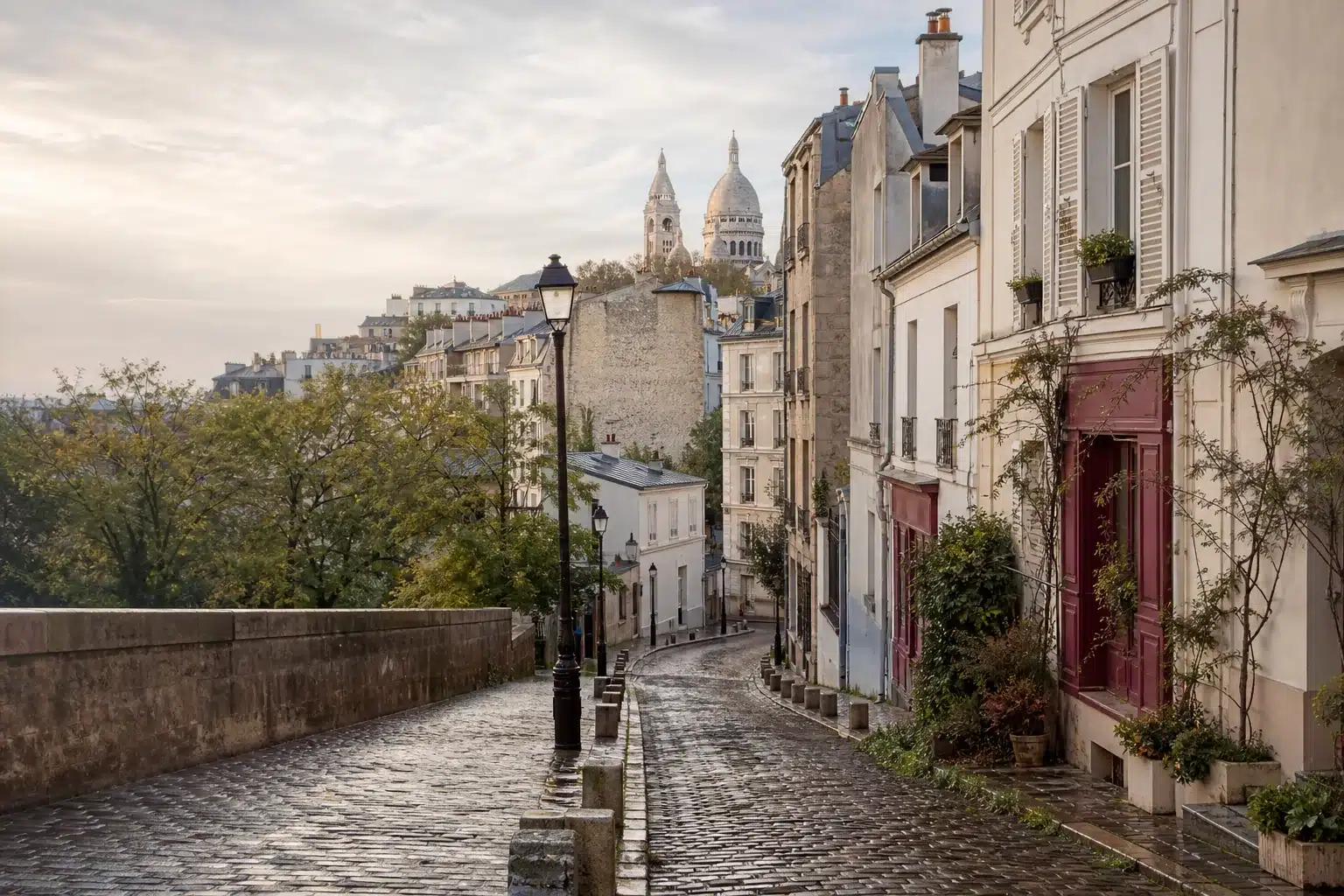
Cobblestone street and façades in Montmartre at first light, with Sacré-Cœur in the distance
Montmartre can also be read through its slopes, façades and views.

Truly worth seeing

Four essentials.

Opening hours and prices can change. Always check the venue’s official website on the day of your visit.

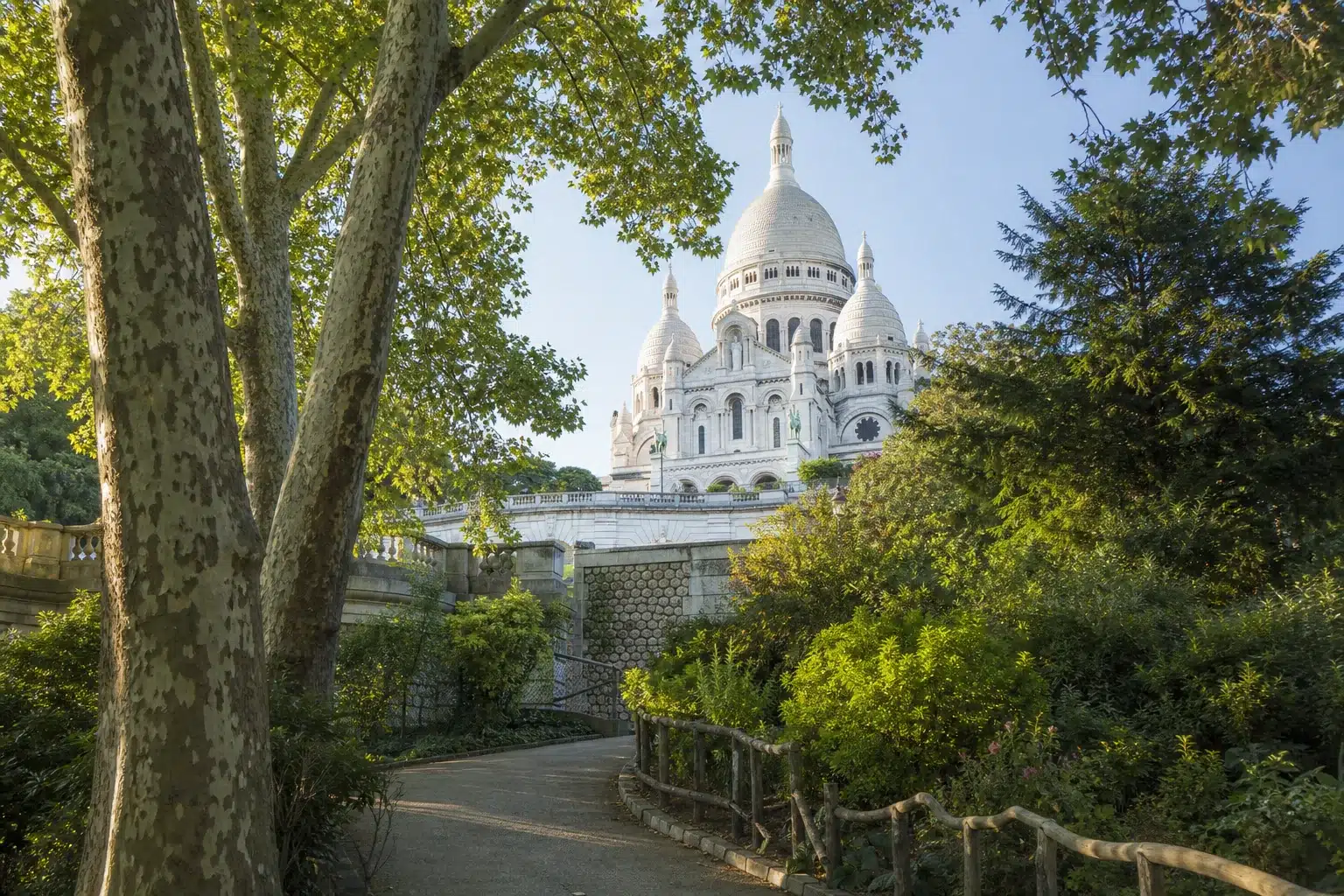
Sacré-Cœur seen from a leafy Montmartre garden
01↗

Free · 6:30 am—10:30 pm

Sacré-Cœur

Visit early, when the nave is at its quietest, or in the evening as the light changes over Paris. The basilica opens free of charge every day, but remains first and foremost a place of worship: appropriate dress, silence and respect for services are requested. A 10–15 minute wait may form between 10:30 am and 5 pm. Lift access for visitors with mobility difficulties is at 35 rue du Chevalier-de-la-Barre.

Official website ↗
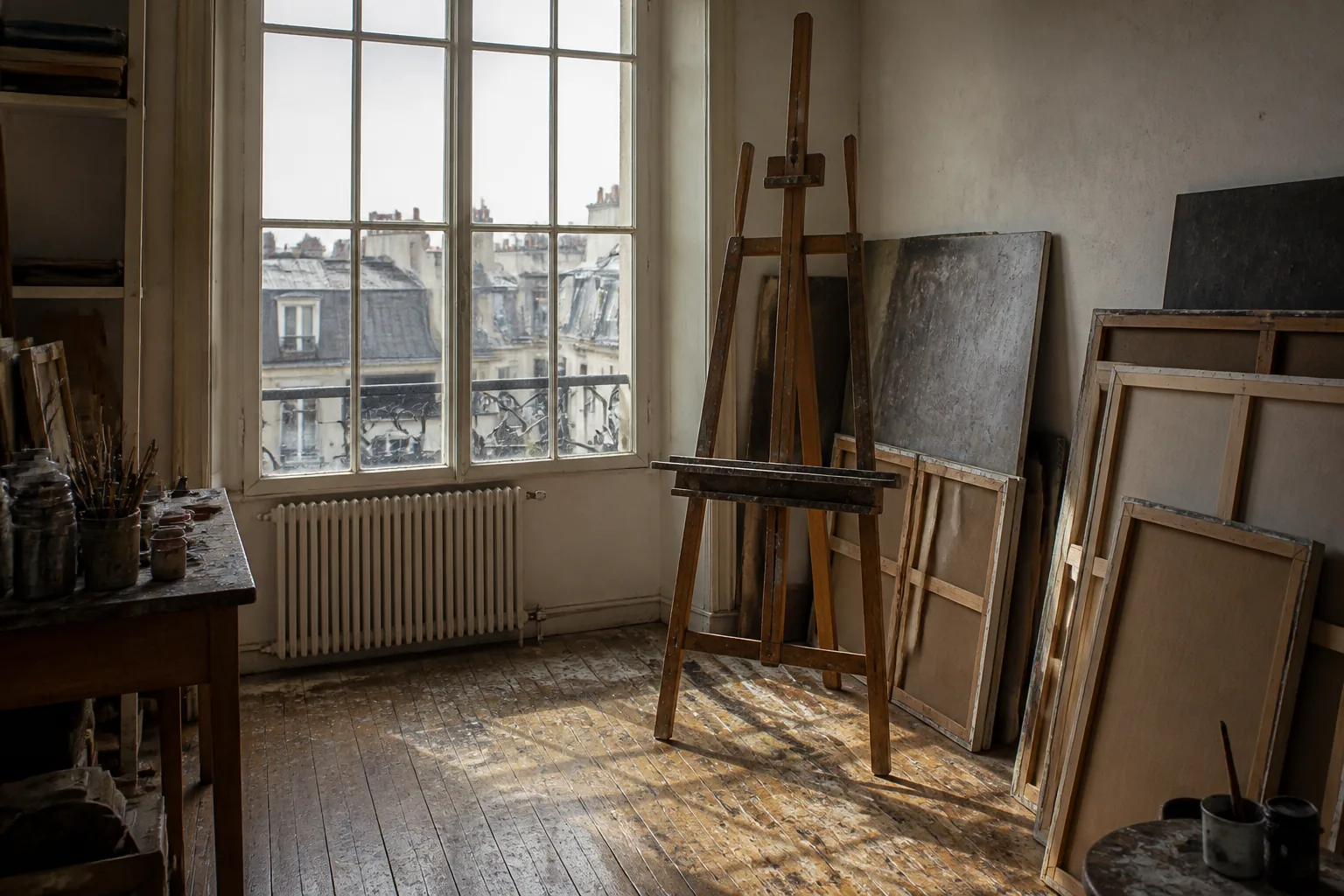
Light-filled artist’s studio in Montmartre
02↗

12 rue Cortot

Musée de Montmartre

Set in one of the hill’s oldest houses, the museum tells Montmartre through its artists, posters, cabarets and studios. The visit continues in the Renoir Gardens, recreated around trees and viewpoints known to the painter. Take time to reach the lower garden: it offers an unusual view over Clos Montmartre and recalls that this much-visited district was first a place of work and creation.

Official website ↗
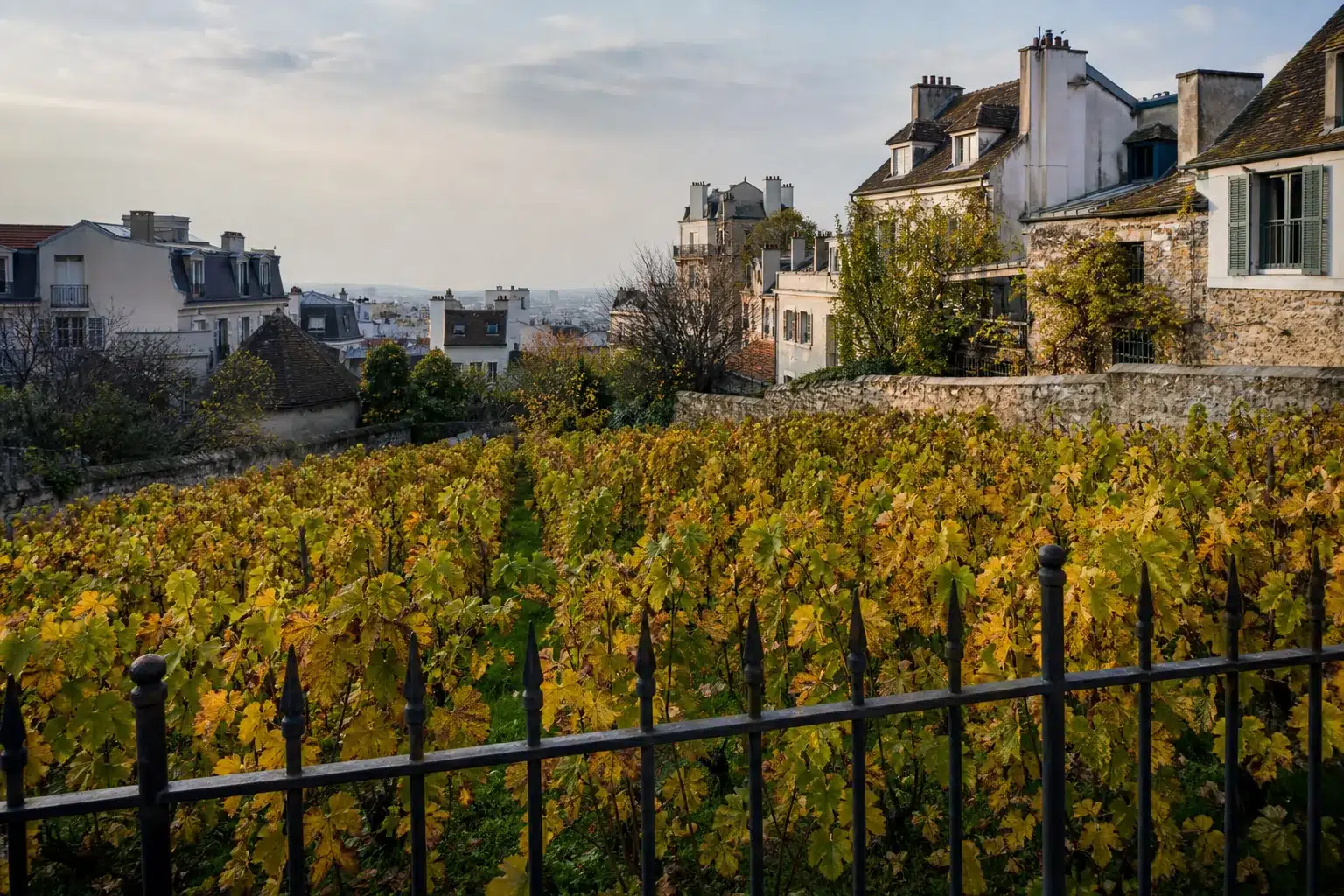
Clos Montmartre vines and hillside homes
03↗

14 rue des Saules

Clos Montmartre

Behind its railings, Clos Montmartre continues a wine-growing tradition revived in the 1930s through the efforts of Poulbot and local residents. The vines are easily seen from rues des Saules and Saint-Vincent, while the enclosure itself opens only on special occasions or guided visits. This small vineyard is not a static backdrop: City gardeners tend it through the seasons and its production supports social causes.

Official website ↗
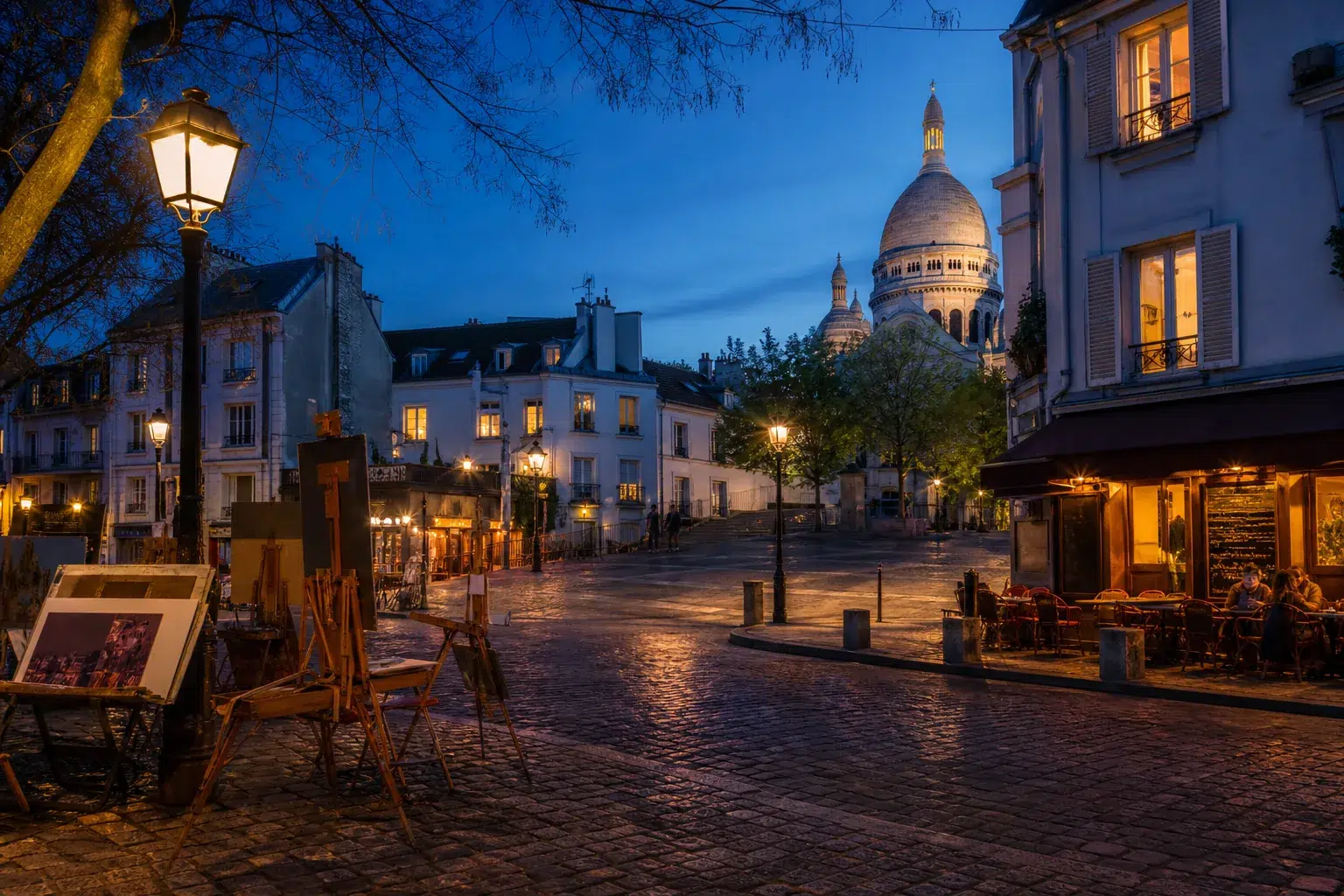
Montmartre square and easels at dusk
04↗

Square Jehan-Rictus

The Wall of Love

The City of Paris lists the wall as inaccessible for safety reasons as of 2 October 2026. Check before travelling.

Official website ↗
Look more slowly, walk a little farther, and let an ordinary street speak as clearly as a monument.
Follow the walk ↗

Living heritage

Eight places that tell the 18th.

Selection documented from official City of Paris and 18th district sources.

01
14 rue des Saules

Clos Montmartre

Planted in 1932 to save the land from development, the vineyard maintains a fully living wine tradition. Rows can be seen from rues des Saules and Saint-Vincent, while the enclosure opens only for particular visits and occasions. City gardeners work year-round with specialists, and proceeds from the harvest support social causes.

Official source ↗
02
20 avenue Rachel

Montmartre Cemetery

Opened in 1825 and officially protected in 2024, the cemetery gathers two centuries of artistic and Parisian history beneath pont Caulaincourt. Graves, chapels, sculptures and trees form an unexpectedly quiet landscape. Visit respectfully: locate divisions in advance, walk gently and remember that it remains a place of remembrance.

Official source ↗
03
2 rue du Mont-Cenis

Saint-Pierre de Montmartre

Often overshadowed by neighbouring Sacré-Cœur, Saint-Pierre is among Paris’s oldest churches and preserves the memory of the royal abbey founded in the twelfth century. Its scale, silence and architectural layers offer a very different experience from the basilica. Enter discreetly, look at the capitals and give the building time rather than treating it as a quick detour.

Official source ↗
04
12–14 rue Cortot

Musée de Montmartre

Housed in Maison du Bel Air, one of the hill’s oldest buildings, the museum places artists in locations where some actually lived and worked. Collections, posters, documents and studios evoke bohemia without forgetting popular life. The Renoir Gardens continue the visit in a more intimate landscape, with a vineyard view and space to slow down.

Official source ↗
05
2 rue Ronsard

Halle Saint-Pierre

At the foot of the hill, this Baltard-style hall hosts exhibitions devoted to outsider art, art brut and forms of creation often kept outside conventional institutions. It also contains a bookshop, auditorium and café. Check the current exhibition before visiting, as the experience changes greatly with the programme.

Official source ↗
06
rue Junot

Jardin Junot

This 784 m² green retreat combines biodiversity, an educational garden, reading, drawing, games and pétanque. More than a landscaped space, it is designed as a neighbourhood garden where ages and uses can meet. Its small scale calls for care: share benches, respect planting and give priority to local activities when organised.

Official source ↗
07
Mont-Cenis · Chappe · Foyatier

The hill’s stairways

The Mont-Cenis, rue Chappe and Foyatier steps, among others, give Montmartre its vertical geography. They are more than photogenic: they connect city levels, impose a rhythm and show how people inhabit steep land. Climb without blocking passage, keep handrails free and choose sloping streets if steps become tiring.

Official source ↗
08
Petite Ceinture · 18e

Jardin des Traverses

Created on part of the former Petite Ceinture railway, Jardin des Traverses offers a walk among spontaneous vegetation, urban farming and railway memory. It extends discovery beyond Montmartre’s summit and reveals a more contemporary, collective side of the 18th. Check access and hours, then treat the detour as a genuine stage rather than an afterthought.

Official source ↗

Imaginary Montmartre

Films, books
and songs.

The hill can also be explored through the works that built its legend. Film noir used its shadows, romantic comedy its curved streets, literature its boarding houses and realist song its popular voices. Returning to the works helps distinguish the lived district from the invented setting, and understand why the two still feed one another.

Explore the cultural guide →

Explore further

Each area has its own rhythm.

Look closer

Details that tell the story of a place

1147 · 1954 · 1980

Église Saint-Pierre de Montmartre

Consecrated in 1147, the church combines antique columns, stained glass by Max Ingrand (1954) and bronze doors by Tomaso Gismondi (1980).

Look for. Compare stone, glass and bronze: this medieval building also contains modern work. Look at the doors before entering, then at the stained-glass light, respecting services.

Diocèse de Paris ↗

1894–1904

Église Saint-Jean de Montmartre

The heritage record dates construction to 1894–1904 and identifies architect Anatole de Baudot and engineer Paul Cottancin.

Look for. From place des Abbesses, compare this façade with Saint-Pierre at the summit. The pairing reveals two periods of the neighbourhood while keeping the churches distinct.

Ministère de la Culture — POP ↗

1923 · 475 m²

Basilique du Sacré-Cœur

Inaugurated in 1923, the choir mosaic covers 475 m². Its creators are Olivier Merson, H. M. Magne and R. Martin.

Look for. Find the central figure dressed in white, then the surrounding groups. Treat this observation separately from the outdoor panorama and the climb to the dome.

Basilique du Sacré-Cœur ↗

1889 · 1970 · 1978

Bateau-Lavoir

After its purchase in 1889, the Bateau-Lavoir was converted into studios where Picasso and Juan Gris worked. Fire destroyed the wooden studios in 1970. They were rebuilt in 1978.

Look for. From place Émile-Goudeau, distinguish the memory of the old studios from today’s building. This workplace is not visited like a museum.

Ville de Paris · PLU bioclimatique, annexe X (PDF) ↗

1933

Clos Montmartre

Vines were replanted in 1933 after wine-growing declined on the hill. Today’s Clos is a revival, not an untouched medieval vineyard.

Look for. Follow the rows from rues des Saules and Saint-Vincent. To enter, find an authorised visit; seeing through the railings does not confer access.

Musée de Montmartre ↗

Understand more · choose well

Dates that help explain the façades.

History becomes clearer when the former village, the growth of Paris and the construction of monuments are kept distinct. These dated landmarks put what you see in context without reducing the hill to a single legend.

1860: a change of territory

The Paris Archives list Montmartre among the communes annexed in 1860. Compare old plans with present addresses to understand the streets: a neighbourhood name, a former commune and an arrondissement do not describe exactly the same territory.

Archives de Paris — communes annexées ↗

1875 and 1919: two distinct moments

The sanctuary dates the laying of Sacré-Cœur’s foundation stone to 1875 and its consecration to 16 October 1919. Paul Abadie’s Romano-Byzantine design explains the domes: despite its silhouette, this is not a medieval church.

Sacré-Cœur — our history ↗

A photograph, a period

Eugène Atget’s view of rue de la Bonne, dated between 1900 and 1901 on Commons, is held by the BnF. Compare building volumes, walls and perspective rather than expecting a perfectly matching before-and-after view: framing and street level may differ.

Eugène Atget — notice Commons / collection BnF ↗
Four landmarks, four transformations
  1. 1860Montmartre annexed to Paris
  2. 1875Sacré-Cœur foundation stone
  3. 1919Basilica consecration
  4. 1934First harvest of the replanted vineyard

Sources: Paris Archives, the sanctuary’s history and the City’s vineyard listing. Dates mark separate events, not continuous construction. Harvest source ↗