Read the landscape · Guide 2026
Reservoirs and water towers: understanding the hill
The slope also explains buildings that often go unnoticed. How do you supply water to summit residents when the networks arrive below? This walk reads the structures from public space and connects the district’s geography with its technical history.
The short answer
What matters before you go.
A pump raises water, a reservoir stores it and a water tower helps maintain pressure at elevation. Eau de Paris documents the Saint-Pierre station at 9 place Saint-Pierre, the rue Azaïs reservoir and the water tower replacement in 1927. These structures are not freely accessible visitor monuments.
Action plan
The route,
step by step.
Times and order are guideposts. Always adapt the visit to crowds, actual access and your group’s energy.
Start at place Saint-Pierre
Locate number 9 and the pumping station described by Eau de Paris. First look at the difference in elevation to the summit: it explains the building’s purpose. Stay on public paths.
Reach rue Azaïs
Choose walking or the funicular according to your mobility. At the top, observe the reservoir wall from the street; do not seek a route through a gate. The neighbouring square Nadar can close during events.
Distinguish the functions
Compare storage and pressure using the heritage brochure. A historic façade does not mean the interior has become a museum. Finish on the summit streets or descend towards Abbesses.
Understand more · choose well
Explore the hill through its water network.
Large walls and towers are not all religious relics. Montmartre’s slopes required technical architecture to bring water to homes on the heights.
Below: pump water upwards
Eau de Paris explains that the Saint-Pierre plant pumps water from the network to tanks higher up. Construction began in 1887 alongside the reservoir. Terrain can therefore be read through infrastructure often missed on sightseeing walks.
Eau de Paris — Montmartre au fil de l’eau ↗Rue Azaïs: store
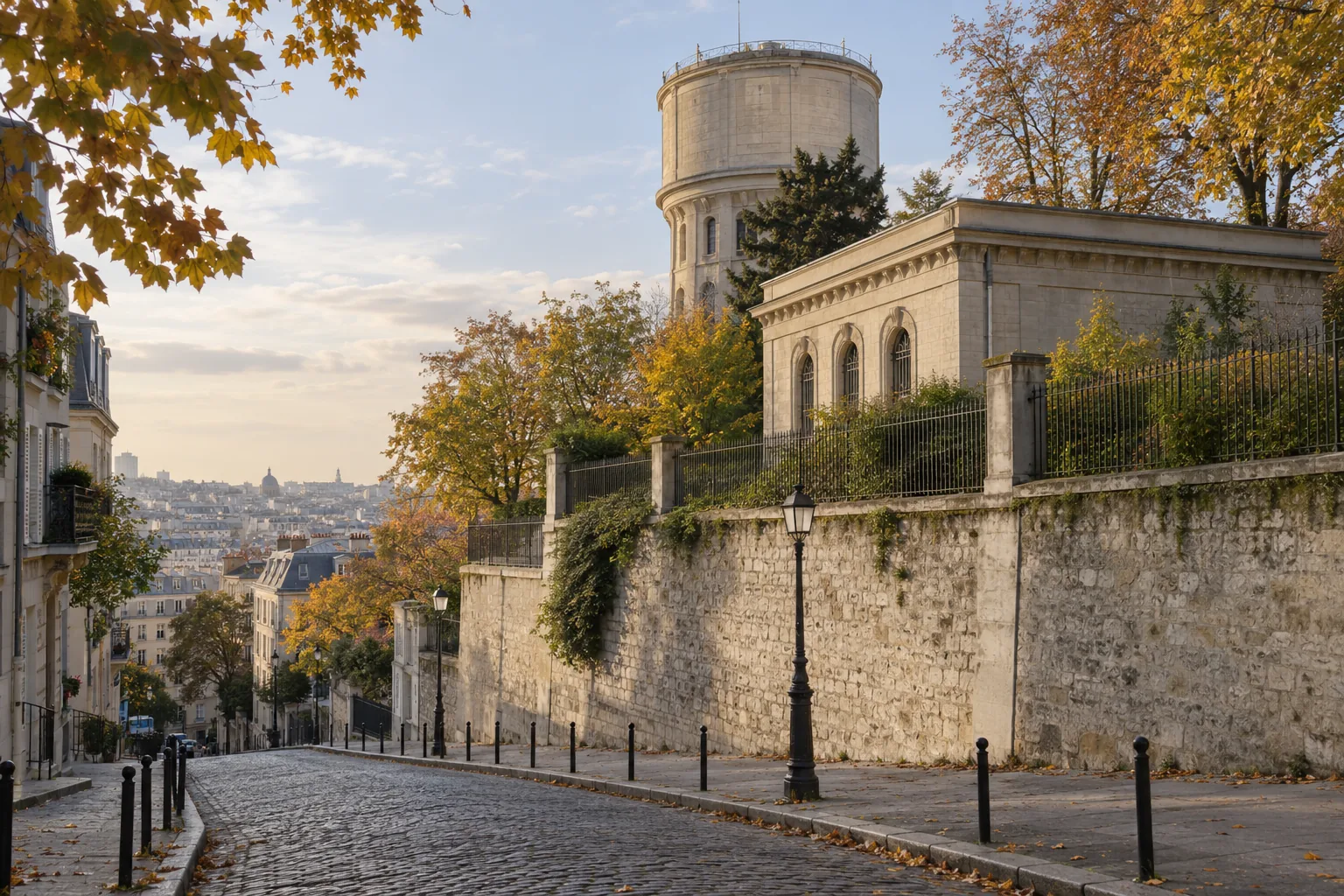
The reservoir was built between 1887 and 1889 at roughly 128 metres above sea level according to Eau de Paris. Five compartments separate drinking and non-drinking water. Observe its walls from the street; these historical facts do not imply public admission.
Eau de Paris — Montmartre au fil de l’eau ↗Rue du Mont-Cenis: distribute
The current water tower dates from 1927 and is 43 metres tall according to the operator. It supplies the upper hill. Distinguish the building’s height from its altitude: the two figures measure different things.
Eau de Paris — Montmartre au fil de l’eau ↗- Pump
Saint-Pierre plant · construction from 1887
- Water storage
Rue Azaïs reservoir · 1887–1889 · roughly 128 m above sea level
- Distribute
Rue du Mont-Cenis water tower · 1927 · 43 m tall building
Conceptual diagram, not to scale: it explains functions, not the exact pipe routes. Eau de Paris ↗
Look closer
Details that tell the story of a place

1858 · 1889
Square Nadar
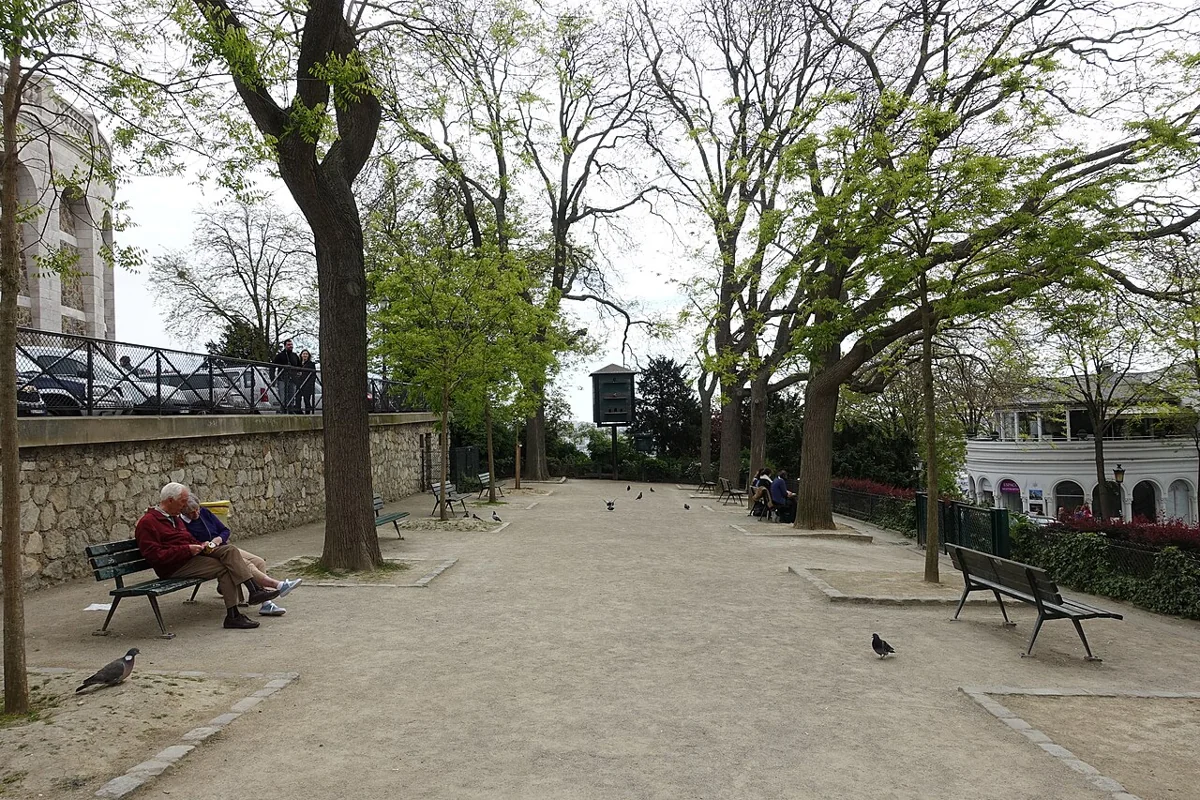
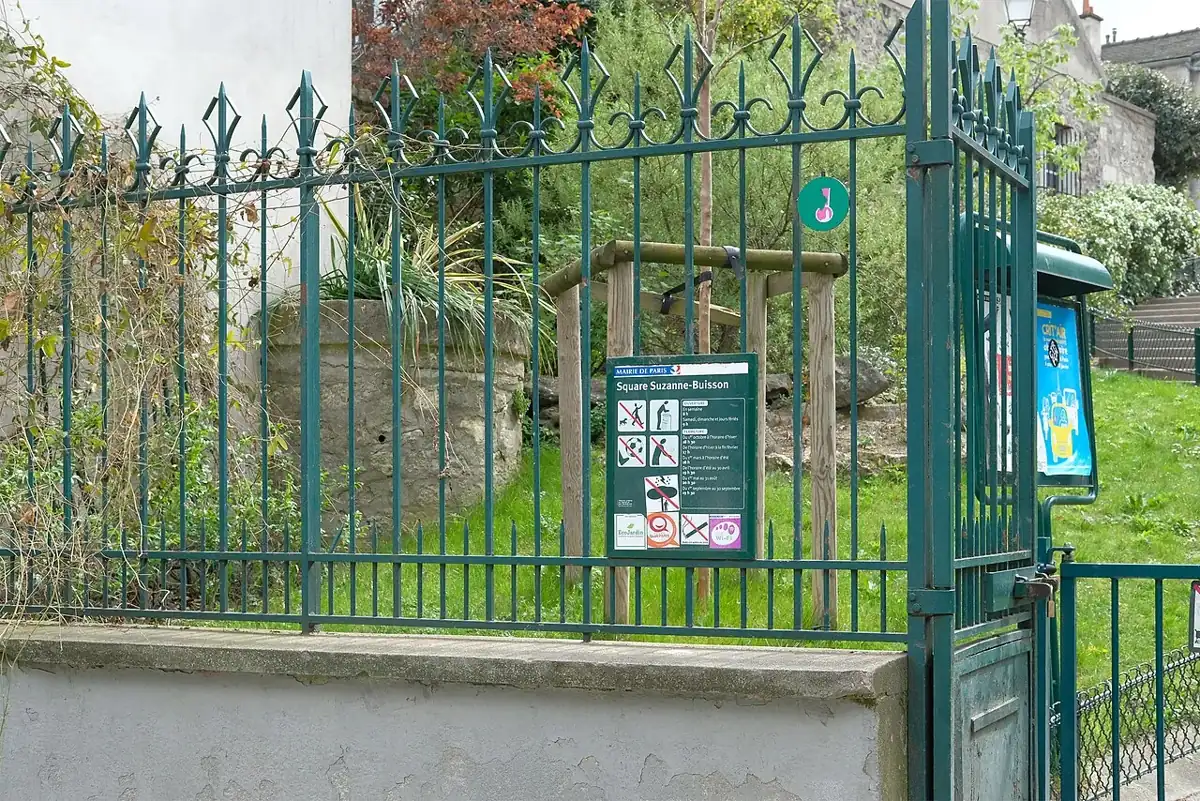
The garden is named after photographer Nadar, a pioneer of aerial views in 1858. The neighbouring reservoirs, built in 1889, have a fortress-like appearance.
Look for. Compare the reservoirs’ turrets with the forms of Sacré-Cœur. Here architecture clothes a water-supply function, not a former castle.
Ville de Paris ↗
1986
Lavoir Moderne Parisien
The former washhouse on rue Léon became a theatre in 1986 through Hervé Breuil’s initiative. Its conversion connects everyday working history with performing arts.
Look for. Notice the scale of a neighbourhood venue, different from the large boulevard halls. Choose a performance to discover the interior in its present use.
Lavoir Moderne Parisien ↗Useful trade-offs
What really changes the visit.
Observe without entering
A special visit must be announced by the operator. Neither an old brochure nor a tour photograph amounts to a booking or permission to enter.
Prepare a reading
Download the brochure before leaving and choose two or three viewpoints. Technical captions make the walk more informative than a sequence of façade photographs.
Practical questions
Before confirming the route.
Can I drink water from a decorative pool?+
Do not confuse a hydraulic structure or pool with drinking water. Use only a fountain identified as potable.
Does this route avoid slopes?+
No: elevation differences are the point of the route. To reduce effort, start at the summit and descend, keeping suitable transport as a fallback.
Check on the day
Official and practical sources.
Hours, outages, works, prices and access conditions change. For any important requirement, check the relevant source and contact the venue directly.