For a rainy day · Guide 2026
Visit Montmartre in the rain
Rain changes the hill without cancelling it. Cobbles become more slippery and views less predictable, but museums, churches, cafés, cinemas and small venues make a rich day possible without long exposed walks. Book one indoor anchor, then connect two or three nearby places.
Date listed by the source: 2013-08-22 16:05. Resized and converted to WebP. This image does not establish the venue’s present condition.
The short answer
What matters before you go.
Start with Musée de Montmartre or Halle Saint-Pierre, keep outdoor links short, then choose Saint-Pierre church, a café or a cinema screening. Do not build the day around a view: in poor weather, treat any clearing as a bonus. The funicular reduces the number of steps, but check its current operation with RATP.
Action plan
The route,
step by step.
Times and order are guideposts. Always adapt the visit to crowds, actual access and your group’s energy.
Choose an indoor visit
Book the place that matters most and check cloakroom, accessibility and opening information. Musée de Montmartre suits local history; Halle Saint-Pierre focuses on temporary exhibitions and outsider art.
Take a proper break
Choose a table near your next stop rather than a distant covered terrace. Let coats and umbrellas dry without blocking circulation, then check the weather before leaving.
Use the simplest streets between stops
Steps and polished cobbles need extra care. Prefer streets with a steady gradient, keep one hand free for railings and do not stop in narrow passages to photograph reflections.
Finish with a film or café
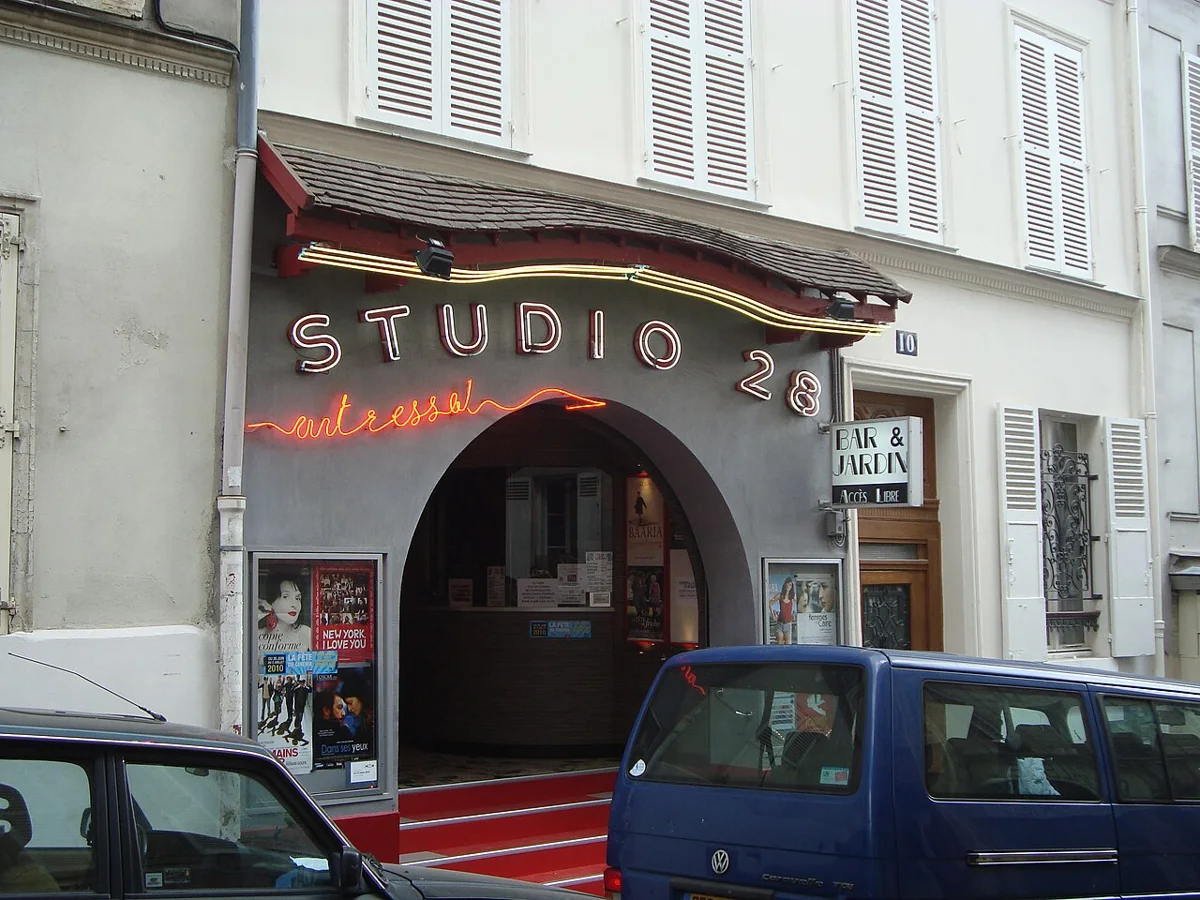
A screening at Studio 28 or a longer break around Abbesses lets you wait for the rain to ease. Check the film version, actual finishing time and your route back.
Different places, different visiting rules
Museums: tickets and visiting days
Collections, gardens and exhibitions have different admission rules. Weekly closing days and free-entry conditions can also determine which museum to choose.
| Place and entrance | Tickets and visit | Calendar and access |
|---|---|---|
| Musée de Montmartre12 rue Cortot, 75018 Paris | The Jardins Renoir ticket covers the gardens and café, without the collections or exhibitions. It does not replace a museum admission ticket. | Normally open daily. October–February: last entry 5:15 pm, galleries close 5:45 pm, museum closes 6 pm. March–September: each of these times is one hour later.Venue conditions ↗ |
| Musée national Gustave Moreau14 rue de La Rochefoucauld, 75009 Paris | The joint Moreau–Henner ticket covers the permanent collections at both museums. Their ticket pages list seven days of validity. Admission to the permanent collections is free on the first Sunday of the month. Check opening and ticketing before visiting. | Closed Tuesdays. Galleries close 15 minutes before the museum. The visit involves three staircases and no lift: consider this before combining the two museums.Venue conditions ↗ |
| Musée de la Vie romantique16 rue Chaptal, 75009 Paris | The permanent collections are free; temporary exhibitions require a paid ticket. The museum occupies painter Ary Scheffer’s former home south of Pigalle, rather than at the hill’s summit. | Closed Mondays. Normally open Tuesday–Sunday, 10 am–6 pm; galleries are cleared at 5:50 pm. Choose a different day for this stop if planning a Monday cultural outing.Venue conditions ↗ |
Conditions checked on . These are regular visiting rules, not confirmation of same-day opening or available places. Public holidays and exceptional closures may affect your visit.
Understand more · choose well
When the weather changes, change the programme.
Rain and cold change walking comfort, light and the need for breaks. Plan one main indoor visit and a short connecting walk; this makes the neighbourhood more enjoyable than keeping every detour.
Light rain: reduce stairways
Keep a short loop and identify places to stop. Cobbles and steps can be slippery: adapt your pace and avoid stepping backwards into the road for a photograph. A wet street also offers reflections without a long outdoor wait.
Persistent rain: choose a full visit
A museum, cinema or exhibition is a destination, not just shelter. Check opening, booking, screening language and access. Make the remaining walk optional, and do not assume cafés or libraries accept large luggage.
Winter: do outdoor stops earlier
Shorter days favour streets and gardens earlier, followed by an indoor visit. This seasonal advice does not give a sunset time: check your date’s daylight and venue hours before choosing a slot.
Your visit through the year
Which Montmartre for each season?
Compare priorities to adapt your walk. These are editorial pointers, not weather forecasts or crowd measurements.
Spring · March to May
Alternate gardens and streets.
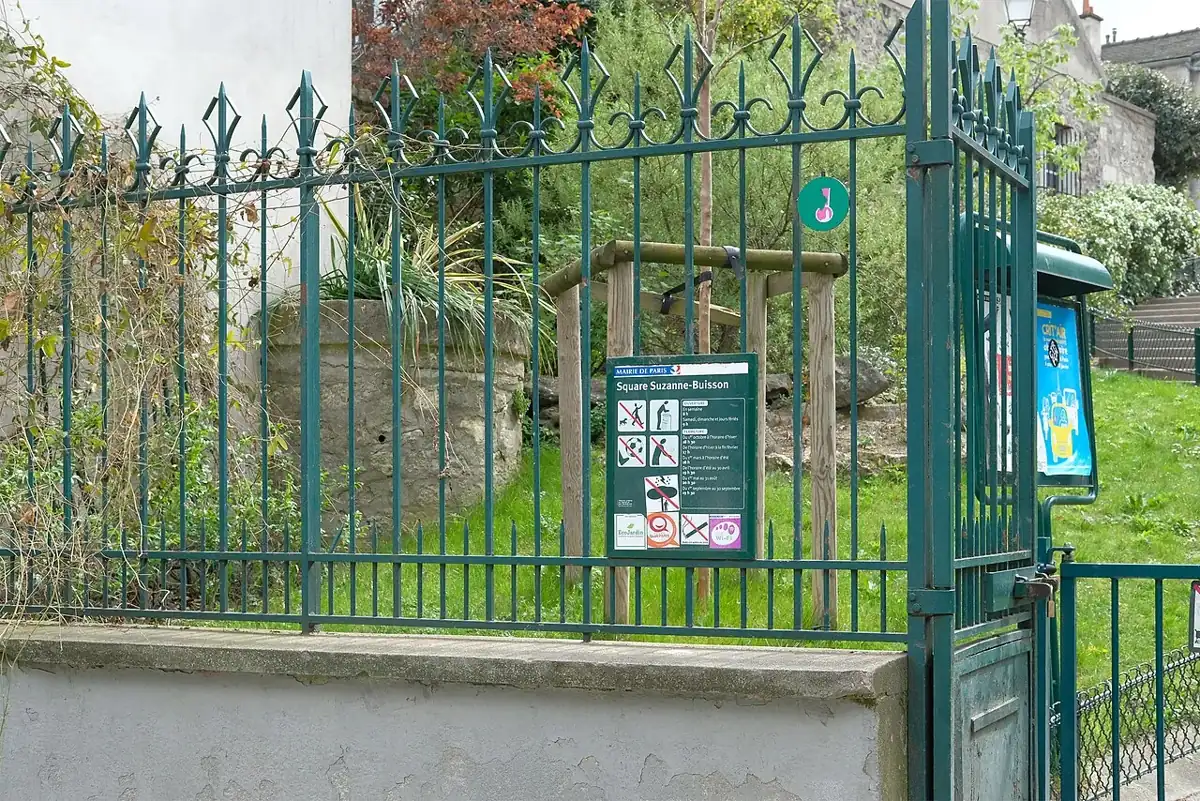
Enjoy gardens when conditions allow, with an indoor option in reserve. Flowering varies by year: a spring photo does not guarantee the same appearance on your day.
| Priority | Gardens, façades, hillside details |
|---|---|
| Plan ahead | A shower and a sheltered break |
| Before leaving | Garden hours and your indoor alternative |
2017-04-02 · Adapted WebP image
Summer · June to August
Put comfort first.
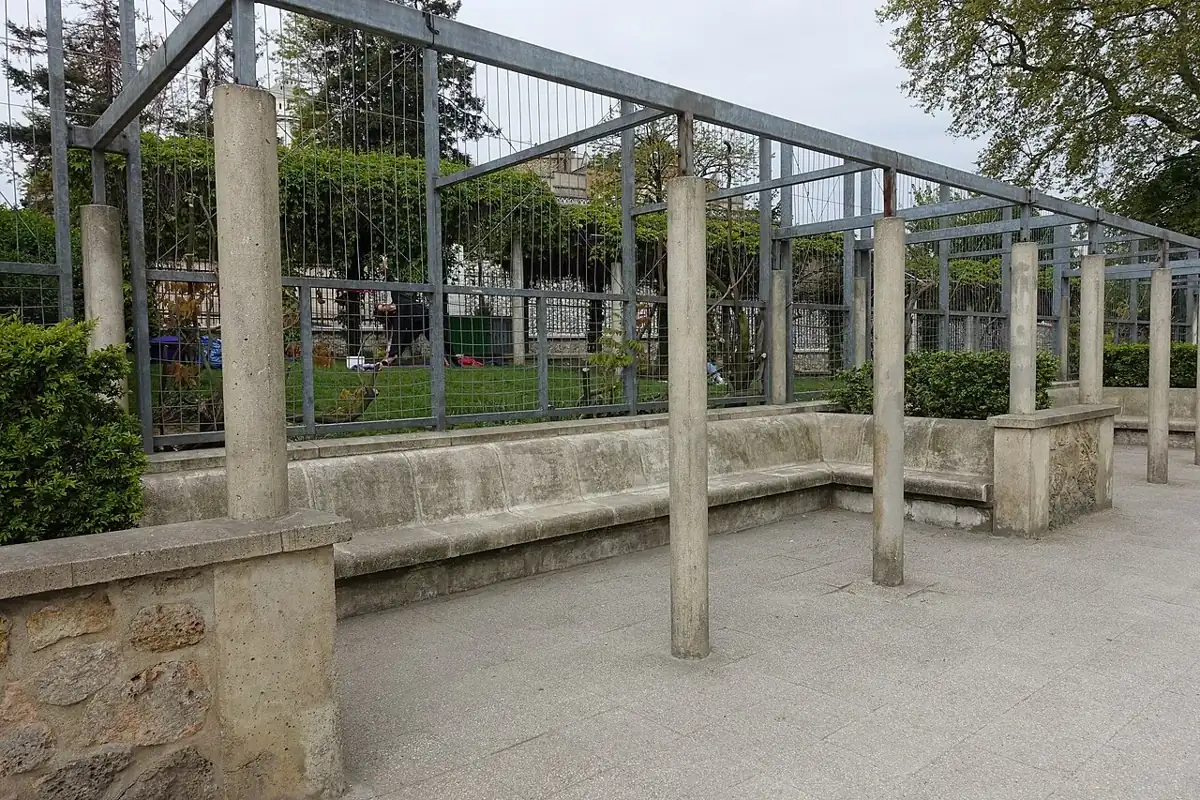
On hot days, schedule uphill and exposed stretches for a suitable time. Carry water, keep a seated break and an option to shorten the route. A leafy garden does not necessarily shade the entire walk.
| Priority | One planned ascent, followed by a break |
|---|---|
| Plan ahead | Heat, water and time outdoors |
| Before leaving | Forecast, water point access, booking |
2017-04-23 · Adapted WebP image
Autumn · September to November
Observe the vines, plan an indoor stop.
The vineyard and gardens offer a seasonal view of the neighbourhood. Colours, harvests and programmes do not all follow fixed calendars. Check each event’s edition; an outdoor walk is distinct from registering for a tour.
| Priority | Vines from the streets, then museum or cinema |
|---|---|
| Plan ahead | Rain and changing light |
| Before leaving | Event date, access and registration |
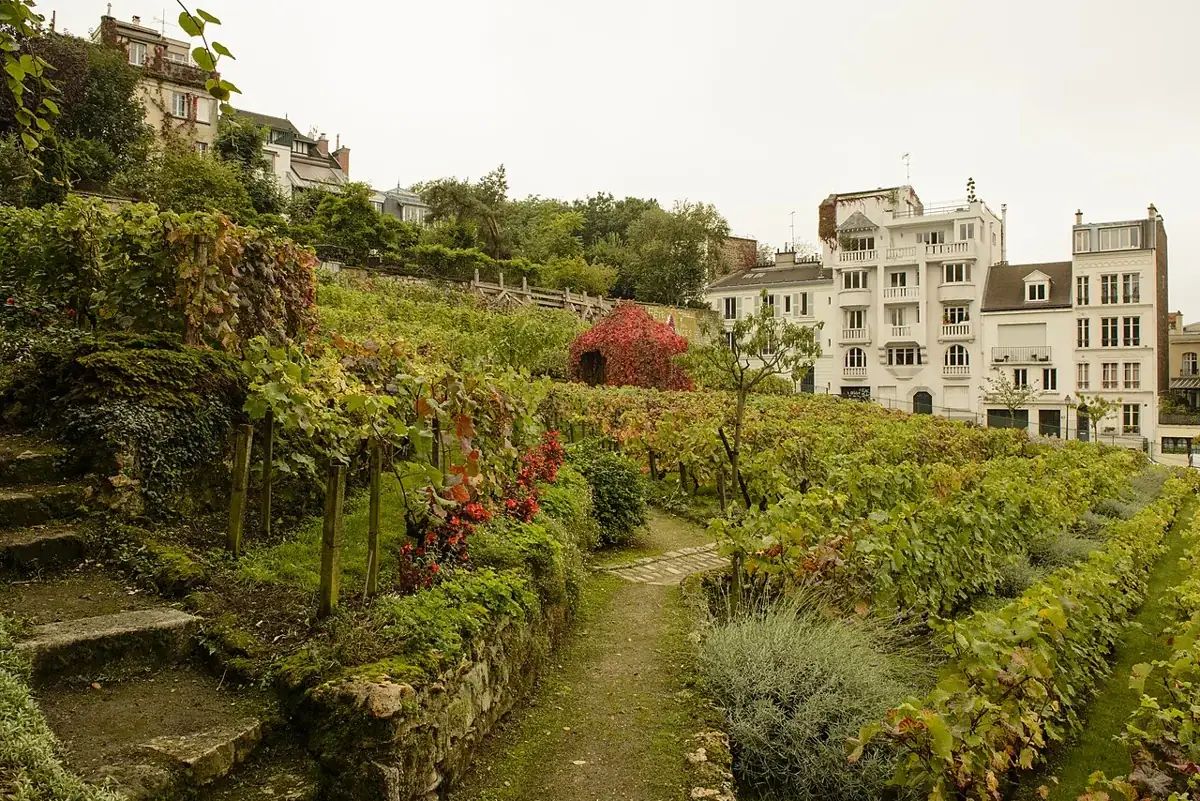
2012-10-09 · Adapted WebP image
Winter · December to February
Shorten outdoor stretches, explore indoors.
Visit streets and viewpoints during daylight, followed by an exhibition or screening. Confirm holiday hours and temporary closures. This seasonal pointer predicts neither weather nor the exact sunset time.
| Priority | A short loop and an indoor visit |
|---|---|
| Plan ahead | Cold, short days and wet surfaces |
| Before leaving | Last admission, screening, holiday hours |
Look closer
Details that tell the story of a place
1895
Musée national Gustave Moreau
In 1895, Moreau commissioned Albert Lafon to turn his house into a museum. A spiral staircase connects the large north-lit studios.
Look for. Compare the scale of the domestic rooms and studios. Observe how light affects the works; plan access to the upper floors separately.
Musée Gustave Moreau ↗1928 · 1930 · 1950
Studio 28
Opened in 1928, Studio 28 screened Buñuel’s L’Âge d’or in 1930. Jean Cocteau and Abel Gance became its patrons in 1950.
Look for. Connect this history with an actual screening: choose the film, language and time. Discover a working cinema alongside the neighbourhood’s filming locations.
Studio 28 ↗
1868 · 1986
Halle Saint-Pierre
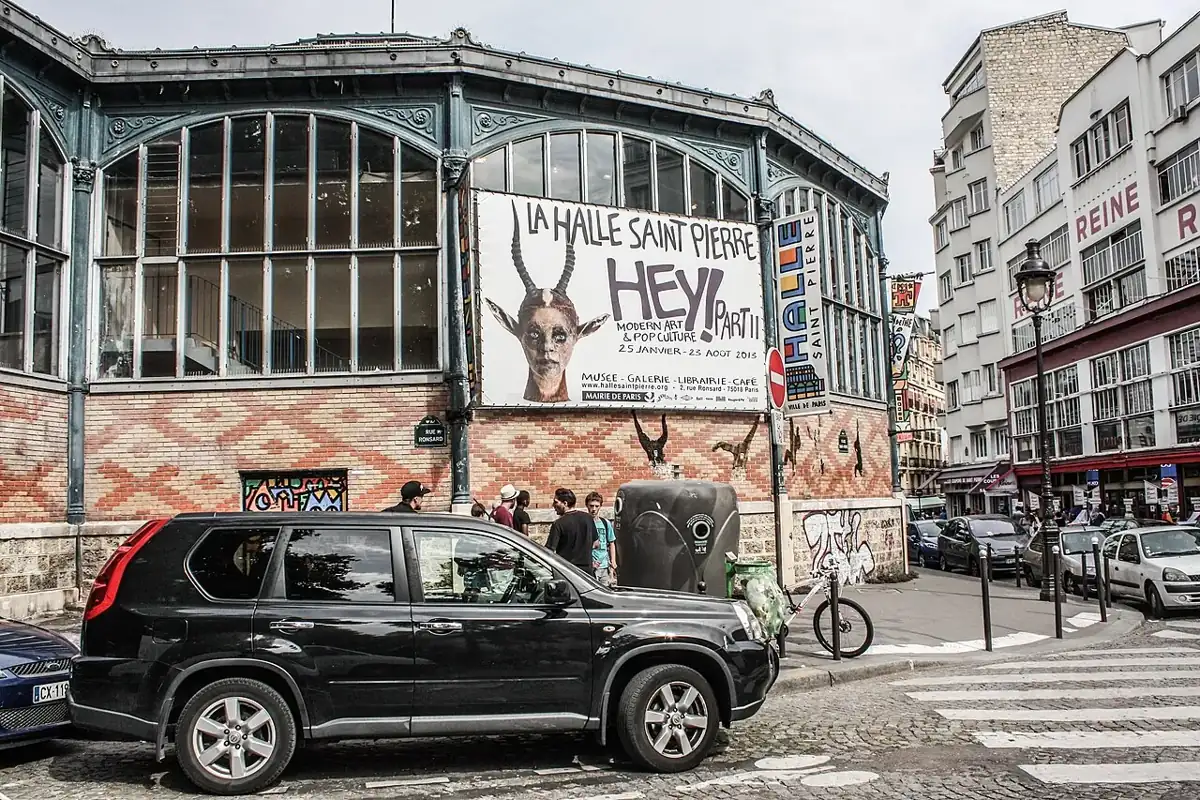
Inaugurated on 2 January 1868, this hall first housed a covered market, disused from 1921. It became a cultural venue in 1986.
Look for. Compare the hall’s frame with the spaces an exhibition needs. The building and the works on display belong to two histories worth reading together.
Conseil de Paris · 2025 DAC 403 (PDF) ↗Useful trade-offs
What really changes the visit.
Compact umbrella
A narrow umbrella is easier in small streets and simpler to store at venue entrances.
Flexible plan
Keep one stop optional: heavy rain, a queue or slippery ground can lengthen every connection.
Photograph without obstructing
Reflections are beautiful, but pavements remain narrow. Frame from a wider point and let residents pass.
Practical questions
Before confirming the route.
Does the funicular run in the rain?+
It normally runs as public transport, but faults, maintenance or incidents can affect service. Check RATP immediately before travelling.
Can the whole visit be indoors?+
No: venues are separated by sloping streets. You can still limit outdoor links to a few minutes by grouping stops around rue Cortot and the summit, or around Anvers and Halle Saint-Pierre.
Check on the day
Official and practical sources.
Hours, outages, works, prices and access conditions change. For any important requirement, check the relevant source and contact the venue directly.